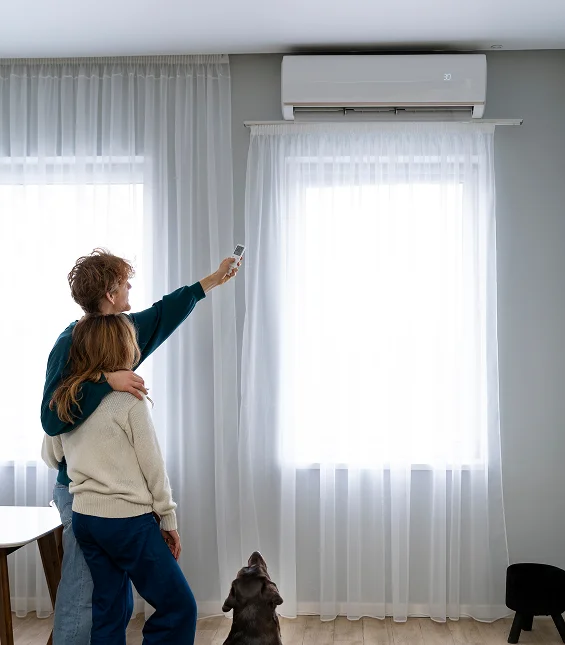
When Is the Right Time to Upgrade Your Air Conditioning System?
Air conditioning systems are built to last, but they won’t last forever. Like any mechanical equipment, there comes a point where repairs become more frequent, running costs creep up and the system simply can’t keep pace with what you need from it. The tricky part is knowing when you’ve crossed that line from “worth maintaining” into “time for something new.”

Why you can trust our content
We understand that the air conditioning industry can be confusing, with plenty of outdated or misleading information. That’s why we rely only on trusted, proven sources to guide our advice, system recommendations, and installations.






Signs It’s Time to Replace Your Air Conditioning System
Whether you’ve had your current system for a decade or you’re just noticing a dip in performance, this guide will walk you through the most reliable signals that an upgrade could be the smarter move.
If you’d like expert guidance on whether an upgrade is right for your property, you can request a bespoke quote from the team at We Cool & Heat.
How Long Should an Air Conditioning System Last?
A well-maintained air conditioning system can serve you reliably for somewhere between 12 and 20 years, depending on the make, model and how consistently it’s been looked after. Systems that receive regular annual servicing tend to sit at the higher end of that range, while those that have been neglected or frequently pushed hard in extreme temperatures will age faster.
The age of your system isn’t the only factor to consider, but it is a useful starting point. If yours is approaching or beyond the 15-year mark, it’s worth assessing whether the technology inside it is still fit for purpose, particularly when modern systems offer significantly better efficiency and quieter operation than older equivalents.
Signs Your System Is Struggling to Keep Up
Performance issues are usually the first thing homeowners notice. If any of the following sound familiar, your system may be telling you something important:
- The room never quite reaches the temperature you’ve set
- The unit runs for longer than it used to just to achieve the same result
- You’re hearing unusual sounds such as rattling, grinding or persistent humming
- There’s a musty or stale smell coming from the unit
- The system cuts in and out repeatedly in a short space of time
- You’ve had the same fault repaired more than once in the past year
None of these issues in isolation necessarily means replacement is the only option, but a pattern of recurring faults is a strong indicator that the system’s core components are wearing out.
Which of these best describes your property?
 Detached
 Semi Detached
 Terrace House
 Flat
 Bungalow
 Static Homes
 Commercial or small office
It just takes 60 Sec
And then you can book a free consultation
Repair Costs vs Replacement Value
One of the most practical ways to assess whether to upgrade is to compare what you’re spending on repairs against what a new system would deliver. A useful rule of thumb is this: if a single repair is going to cost more than a third of what a comparable new system would, replacement starts to make strong financial sense.
|
Situation |
Suggested Action |
|
System under 8 years old, first fault |
Repair and monitor |
|
System 8-12 years old, occasional faults |
Service and assess efficiency |
|
System over 12 years old, recurring faults |
Seek upgrade advice |
|
System over 15 years old, major component failure |
Replacement is likely more cost-effective |
|
Any age, significant performance decline |
Professional assessment recommended |
A qualified engineer can help you weigh up the options honestly, without pushing you towards a decision that doesn’t suit your situation.
Does Your Current System Still Match Your Needs?
Homes and lifestyles change. If you’ve extended your property, converted a loft space, added a home office or taken on more people living under the same roof, your original system may simply be undersized for what you’re asking it to do now.
The same applies if you originally had a single-room unit fitted but now want comfort across multiple spaces. A multi-split or ducted system might be far more appropriate for where your life is today compared to where it was when the original unit was fitted. Speaking to a local specialist is the best way to understand what configuration suits your current property.
Is an Upgrade Worth It for Energy Efficiency Alone?
Modern air conditioning systems have come a long way in terms of efficiency. Inverter-driven technology, low global warming potential (GWP) refrigerants and smarter controls all mean that a new system will typically run more economically than one manufactured a decade ago.
If your energy bills have been climbing steadily and nothing has changed about how you use the system, ageing components and declining efficiency could well be the reason. Brands such as Mitsubishi, Daikin and Worcester Bosch have invested heavily in making their current generation of systems both quieter and more efficient than their predecessors, which is worth factoring in when you’re weighing up a decision.
A Typical Scenario
Consider a semi-detached home in Bath where the owners had a wall-mounted split system fitted around 14 years ago. Over the past two summers, they noticed the unit was struggling to cool the living room, even on mildly warm days. A repair to the compressor was carried out one year, then a refrigerant top-up the following year. When the same cooling issue returned a third time, a professional assessment revealed the system had simply reached the end of its effective working life.
Rather than spending on another repair, the homeowners opted for a new, more capable system. The fitting took less than a day and the difference in performance was immediately noticeable. They also found the new unit ran significantly more quietly, which had been a background nuisance they’d grown so used to they’d almost stopped noticing.
This kind of scenario plays out regularly across Wiltshire and the surrounding area, and it highlights how a timely upgrade can deliver genuine, day-to-day improvements rather than just fixing what’s broken.
Knowing when to upgrade your air conditioning system comes down to a combination of age, performance, repair frequency and whether the system still suits your needs. When the signals start stacking up, getting an honest assessment from a qualified engineer is always the right first step.
If you’re based in or around Bath and you’d like to talk through your options, the team at We Cool & Heat are happy to help. Get in touch today to arrange a no-obligation conversation about upgrading your system.
Related articles
Which of these best describes your property?
Detached
Semi Detached
Terrace
Flat
Bungalow
Static Homes
Commercial or small office
Whether you’ve had your current system for a decade or you’re just noticing a dip in performance, this guide will walk you through the most reliable signals that an upgrade could be the smarter move.
If you’d like expert guidance on whether an upgrade is right for your property, you can request a bespoke quote from the team at We Cool & Heat.
How Long Should an Air Conditioning System Last?
A well-maintained air conditioning system can serve you reliably for somewhere between 12 and 20 years, depending on the make, model and how consistently it’s been looked after. Systems that receive regular annual servicing tend to sit at the higher end of that range, while those that have been neglected or frequently pushed hard in extreme temperatures will age faster.
The age of your system isn’t the only factor to consider, but it is a useful starting point. If yours is approaching or beyond the 15-year mark, it’s worth assessing whether the technology inside it is still fit for purpose, particularly when modern systems offer significantly better efficiency and quieter operation than older equivalents.
Signs Your System Is Struggling to Keep Up
Performance issues are usually the first thing homeowners notice. If any of the following sound familiar, your system may be telling you something important:
- The room never quite reaches the temperature you’ve set
- The unit runs for longer than it used to just to achieve the same result
- You’re hearing unusual sounds such as rattling, grinding or persistent humming
- There’s a musty or stale smell coming from the unit
- The system cuts in and out repeatedly in a short space of time
- You’ve had the same fault repaired more than once in the past year
None of these issues in isolation necessarily means replacement is the only option, but a pattern of recurring faults is a strong indicator that the system’s core components are wearing out.
Which of these best describes your property?
Detached
Semi Detached
Terrace House
Flat
Bungalow
Static Homes
Commercial or small office
It just takes 60 Sec
And then you can book a free consultation
Repair Costs vs Replacement Value
One of the most practical ways to assess whether to upgrade is to compare what you’re spending on repairs against what a new system would deliver. A useful rule of thumb is this: if a single repair is going to cost more than a third of what a comparable new system would, replacement starts to make strong financial sense.
|
Situation |
Suggested Action |
|
System under 8 years old, first fault |
Repair and monitor |
|
System 8-12 years old, occasional faults |
Service and assess efficiency |
|
System over 12 years old, recurring faults |
Seek upgrade advice |
|
System over 15 years old, major component failure |
Replacement is likely more cost-effective |
|
Any age, significant performance decline |
Professional assessment recommended |
A qualified engineer can help you weigh up the options honestly, without pushing you towards a decision that doesn’t suit your situation.
Does Your Current System Still Match Your Needs?
Homes and lifestyles change. If you’ve extended your property, converted a loft space, added a home office or taken on more people living under the same roof, your original system may simply be undersized for what you’re asking it to do now.
The same applies if you originally had a single-room unit fitted but now want comfort across multiple spaces. A multi-split or ducted system might be far more appropriate for where your life is today compared to where it was when the original unit was fitted. Speaking to a local specialist is the best way to understand what configuration suits your current property.
Is an Upgrade Worth It for Energy Efficiency Alone?
Modern air conditioning systems have come a long way in terms of efficiency. Inverter-driven technology, low global warming potential (GWP) refrigerants and smarter controls all mean that a new system will typically run more economically than one manufactured a decade ago.
If your energy bills have been climbing steadily and nothing has changed about how you use the system, ageing components and declining efficiency could well be the reason. Brands such as Mitsubishi, Daikin and Worcester Bosch have invested heavily in making their current generation of systems both quieter and more efficient than their predecessors, which is worth factoring in when you’re weighing up a decision.
A Typical Scenario
Consider a semi-detached home in Bath where the owners had a wall-mounted split system fitted around 14 years ago. Over the past two summers, they noticed the unit was struggling to cool the living room, even on mildly warm days. A repair to the compressor was carried out one year, then a refrigerant top-up the following year. When the same cooling issue returned a third time, a professional assessment revealed the system had simply reached the end of its effective working life.
Rather than spending on another repair, the homeowners opted for a new, more capable system. The fitting took less than a day and the difference in performance was immediately noticeable. They also found the new unit ran significantly more quietly, which had been a background nuisance they’d grown so used to they’d almost stopped noticing.
This kind of scenario plays out regularly across Wiltshire and the surrounding area, and it highlights how a timely upgrade can deliver genuine, day-to-day improvements rather than just fixing what’s broken.
Knowing when to upgrade your air conditioning system comes down to a combination of age, performance, repair frequency and whether the system still suits your needs. When the signals start stacking up, getting an honest assessment from a qualified engineer is always the right first step.
If you’re based in or around Bath and you’d like to talk through your options, the team at We Cool & Heat are happy to help. Get in touch today to arrange a no-obligation conversation about upgrading your system.
Related articles
Which of these best describes your property?
Detached
Semi Detached
Terrace
Flat
Bungalow
Static Homes
Commercial or small office
Signs It’s Time to Replace Your Air Conditioning System
Whether you’ve had your current system for a decade or you’re just noticing a dip in performance, this guide will walk you through the most reliable signals that an upgrade could be the smarter move.
If you’d like expert guidance on whether an upgrade is right for your property, you can request a bespoke quote from the team at We Cool & Heat.
How Long Should an Air Conditioning System Last?
A well-maintained air conditioning system can serve you reliably for somewhere between 12 and 20 years, depending on the make, model and how consistently it’s been looked after. Systems that receive regular annual servicing tend to sit at the higher end of that range, while those that have been neglected or frequently pushed hard in extreme temperatures will age faster.
The age of your system isn’t the only factor to consider, but it is a useful starting point. If yours is approaching or beyond the 15-year mark, it’s worth assessing whether the technology inside it is still fit for purpose, particularly when modern systems offer significantly better efficiency and quieter operation than older equivalents.
Signs Your System Is Struggling to Keep Up
Performance issues are usually the first thing homeowners notice. If any of the following sound familiar, your system may be telling you something important:
- The room never quite reaches the temperature you’ve set
- The unit runs for longer than it used to just to achieve the same result
- You’re hearing unusual sounds such as rattling, grinding or persistent humming
- There’s a musty or stale smell coming from the unit
- The system cuts in and out repeatedly in a short space of time
- You’ve had the same fault repaired more than once in the past year
None of these issues in isolation necessarily means replacement is the only option, but a pattern of recurring faults is a strong indicator that the system’s core components are wearing out.
Which of these best describes your property?
Detached
Semi Detached
Terrace House
Flat
Bungalow
Static Homes
Commercial or small office
It just takes 60 Sec
And then you can book a free consultation
Repair Costs vs Replacement Value
One of the most practical ways to assess whether to upgrade is to compare what you’re spending on repairs against what a new system would deliver. A useful rule of thumb is this: if a single repair is going to cost more than a third of what a comparable new system would, replacement starts to make strong financial sense.
|
Situation |
Suggested Action |
|
System under 8 years old, first fault |
Repair and monitor |
|
System 8-12 years old, occasional faults |
Service and assess efficiency |
|
System over 12 years old, recurring faults |
Seek upgrade advice |
|
System over 15 years old, major component failure |
Replacement is likely more cost-effective |
|
Any age, significant performance decline |
Professional assessment recommended |
A qualified engineer can help you weigh up the options honestly, without pushing you towards a decision that doesn’t suit your situation.
Does Your Current System Still Match Your Needs?
Homes and lifestyles change. If you’ve extended your property, converted a loft space, added a home office or taken on more people living under the same roof, your original system may simply be undersized for what you’re asking it to do now.
The same applies if you originally had a single-room unit fitted but now want comfort across multiple spaces. A multi-split or ducted system might be far more appropriate for where your life is today compared to where it was when the original unit was fitted. Speaking to a local specialist is the best way to understand what configuration suits your current property.
Is an Upgrade Worth It for Energy Efficiency Alone?
Modern air conditioning systems have come a long way in terms of efficiency. Inverter-driven technology, low global warming potential (GWP) refrigerants and smarter controls all mean that a new system will typically run more economically than one manufactured a decade ago.
If your energy bills have been climbing steadily and nothing has changed about how you use the system, ageing components and declining efficiency could well be the reason. Brands such as Mitsubishi, Daikin and Worcester Bosch have invested heavily in making their current generation of systems both quieter and more efficient than their predecessors, which is worth factoring in when you’re weighing up a decision.
A Typical Scenario
Consider a semi-detached home in Bath where the owners had a wall-mounted split system fitted around 14 years ago. Over the past two summers, they noticed the unit was struggling to cool the living room, even on mildly warm days. A repair to the compressor was carried out one year, then a refrigerant top-up the following year. When the same cooling issue returned a third time, a professional assessment revealed the system had simply reached the end of its effective working life.
Rather than spending on another repair, the homeowners opted for a new, more capable system. The fitting took less than a day and the difference in performance was immediately noticeable. They also found the new unit ran significantly more quietly, which had been a background nuisance they’d grown so used to they’d almost stopped noticing.
This kind of scenario plays out regularly across Wiltshire and the surrounding area, and it highlights how a timely upgrade can deliver genuine, day-to-day improvements rather than just fixing what’s broken.
Knowing when to upgrade your air conditioning system comes down to a combination of age, performance, repair frequency and whether the system still suits your needs. When the signals start stacking up, getting an honest assessment from a qualified engineer is always the right first step.
If you’re based in or around Bath and you’d like to talk through your options, the team at We Cool & Heat are happy to help. Get in touch today to arrange a no-obligation conversation about upgrading your system.
Related articles
Which of these best describes your property?
Detached
Semi Detached
Terrace
Flat
Bungalow
Static Homes
Commercial or small office