Choosing a New Air Conditioner in Trowbridge: Where Should You Start?
Choosing a new air conditioner in Trowbridge? Compare system types, room requirements, installation considerations and costs before making a decision.

Why you can trust our content
We understand that the air conditioning industry can be confusing, with plenty of outdated or misleading information. That’s why we rely only on trusted, proven sources to guide our advice, system recommendations, and installations.






At a glance
Choosing a New Air Conditioner in Trowbridge: Where Should You Start?
Choosing an air conditioning system can feel straightforward until you begin comparing the options. Different units offer different cooling capacities, controls, efficiency ratings and installation requirements. A system that works well in one property may not be suitable for another, even when the rooms appear similar in size.
For homeowners in Trowbridge, the best starting point is to identify what you want the system to achieve. You might want a cooler bedroom during summer nights, a comfortable home office throughout the working day or temperature control across several living spaces. Defining your priorities first makes it easier to compare suitable systems without paying for features you do not need.
What Should You Decide Before Choosing a System?
Before looking at particular models, consider how you use your home and when temperatures become uncomfortable. These details help establish the type of system and capacity worth investigating.
Start by answering four questions:
- Which rooms need cooling? Decide whether the problem affects one room, several separate spaces or most of the property.
- How often will you use the system? Occasional cooling during heatwaves may call for a different approach from daily use throughout summer.
- Do you need heating as well? Many fixed air conditioning systems can provide heating through reverse-cycle heat pump technology.
- What is your budget? Consider the equipment, installation, electricity consumption and ongoing maintenance rather than just the purchase price.
These decisions provide a practical foundation for discussing your requirements with an installer.
If you are uncertain which arrangement would suit your home, We Cool & Heat can help you explore the options based on the rooms you want to cool and your intended use.
Which Type of Air Conditioner Should You Consider?
The main options differ in how they deliver cooled air, the installation work involved and the number of rooms they can serve. Understanding these differences helps narrow the choice.
| System type | Best suited to | Main consideration |
|---|---|---|
| Portable air conditioner | Occasional cooling in one room | Requires suitable exhaust arrangements and can be relatively noisy |
| Wall-mounted split system | Dedicated cooling for a bedroom, office or living room | Requires indoor and outdoor units with connecting pipework |
| Multi-split system | Several rooms requiring independent indoor units | Equipment selection and pipework layout need careful planning |
| Ducted air conditioning | Cooling multiple rooms through concealed ductwork | Installation can be more involved, particularly in existing homes |
Portable units can be useful where a permanent installation is impractical, although they often require more hands-on setup. Fixed systems are generally better suited to homeowners seeking convenient, repeatable temperature control.
Ducted systems may be attractive where discreet distribution throughout the property is important, but available space and installation access can influence whether they are practical.
How Do You Choose the Correct Cooling Capacity?
Cooling capacity is one of the most important factors when selecting equipment. A unit that is too small may struggle to maintain a comfortable temperature during hot weather. An oversized system can also be inefficient or less comfortable if it repeatedly switches on and off rather than operating appropriately for the space.
Room size is a useful starting point, but it is not enough on its own. A professional assessment should consider:
- Floor area and ceiling height.
- The number, size and orientation of windows.
- Direct sunlight and external shading.
- Insulation and the construction of walls and roofs.
- The number of people regularly using the room.
- Heat from computers, televisions, lighting and other equipment.
- Connections to adjoining spaces and how often doors remain open.
For example, two bedrooms with the same floor area might need different equipment if one sits beneath an exposed roof while the other has effective shading and better insulation.
Avoid choosing a unit solely because its advertised capacity matches a rough room-size guide. Ask the installer to explain how the proposed capacity has been selected and whether it is suitable for the room’s expected heat load.
Does Energy Efficiency Matter When Comparing Models?
Yes. Efficiency affects how much electricity a system needs to provide cooling or heating, so it should be considered alongside the purchase price.
Air conditioning models may display seasonal efficiency ratings, such as SEER for cooling and SCOP for heating. These indicators help compare performance under standardised conditions, although actual consumption depends on the installation, outdoor temperatures, control settings and usage patterns.
When comparing equipment, check:
- The relevant energy label and efficiency ratings.
- Whether the system has inverter technology to adjust its output.
- The available temperature controls and timers.
- The noise levels of both indoor and outdoor units.
- Whether heating performance is important to your household.
- The manufacturer’s warranty and recommended servicing requirements.
A model with a higher initial price may offer better efficiency or more useful controls, but this does not automatically mean it will be the cheapest option over its lifetime. The difference depends on how often you use it and the electricity it consumes.
Where Should the Indoor and Outdoor Units Go?
The proposed location can affect comfort, appearance, noise and the complexity of the installation. It should therefore be considered before selecting a final model.
Indoor unit positioning
An indoor unit needs enough unobstructed space to circulate air effectively. Placing it behind furniture or too close to an obstruction can interfere with airflow. Its position should also reduce the likelihood of cold air blowing directly onto someone sitting or sleeping nearby.
Bedrooms may require particular care because noise and airflow direction can affect comfort at night. In living areas, the installer should consider the shape of the room, furniture arrangement and the location of adjoining spaces.
Outdoor unit positioning
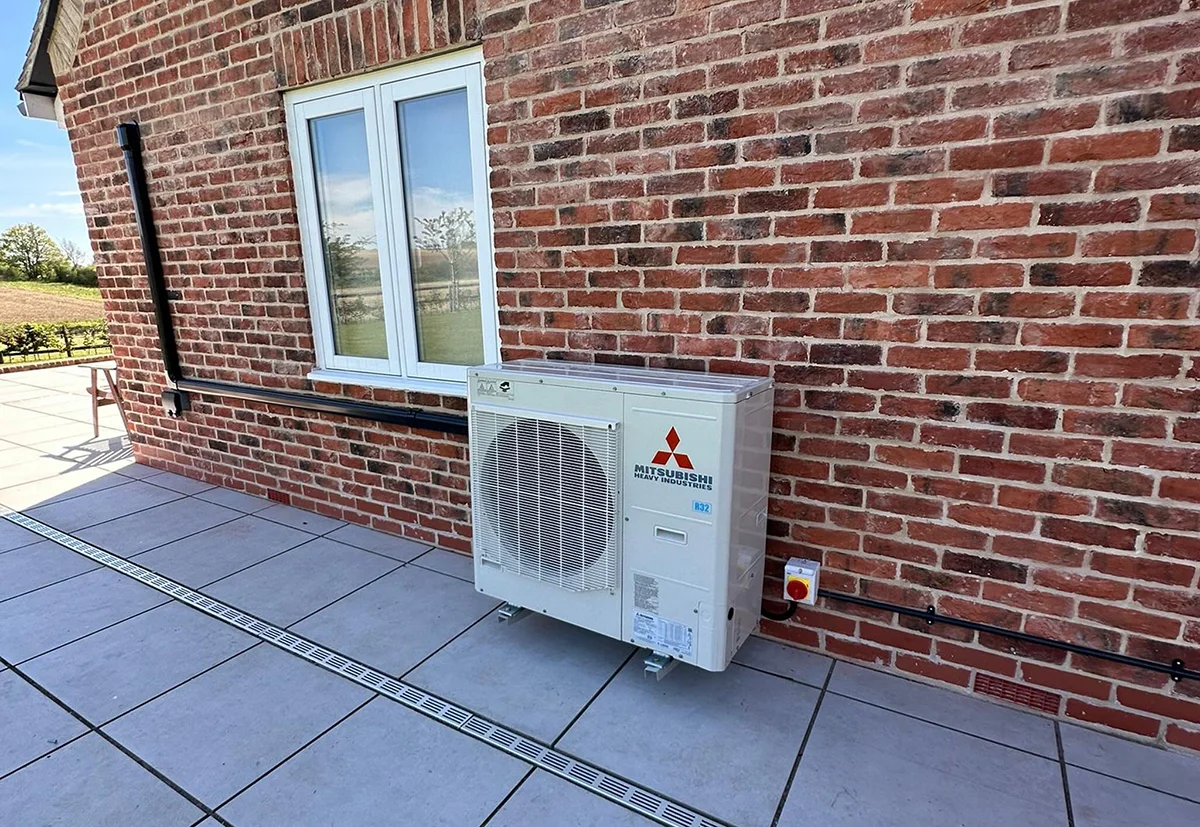
The outdoor unit needs adequate airflow and access for maintenance. It should be positioned on an appropriate mounting or base, with suitable clearance around it.
The installer should also consider noise, vibration, condensate management where relevant and the effect on neighbouring properties. Depending on the property and proposed installation, planning rules or other restrictions may need to be checked.
A site assessment can identify practical constraints before installation begins and help avoid unexpected changes later.
When discussing an air conditioner installation in Trowbridge, ask We Cool & Heat to explain the proposed unit positions and any work required to connect the equipment. Understanding the layout in advance can help you assess whether the solution suits your home.
What Should You Expect From the Installation Process?
The exact process depends on the type of equipment and the property, but a fixed split system generally involves several key stages.
- Assessment and planning: The installer reviews the rooms, cooling requirements, equipment options and possible unit locations.
- Preparing the installation area: Suitable positions are confirmed for the indoor and outdoor units, along with pipework, electrical connections and condensate drainage.
- Installing the equipment: The units are mounted, connected and installed in accordance with the manufacturer’s instructions and applicable requirements.
- Testing and commissioning: The installer checks the system’s operation, controls, airflow and other relevant functions before handing it over.
- Handover and guidance: You should receive instructions on using the controls, cleaning accessible filters and arranging maintenance.
Ask whether electrical work, wall penetrations, condensate drainage and making good are included in the quotation. Clarifying these details beforehand makes it easier to understand what the installation price covers.
How Can You Compare Quotations Fairly?
The lowest quotation is not necessarily the best value. Two installers may recommend different equipment or include different amounts of work, which means their prices are not directly comparable.
Use the following checklist when reviewing proposals:
- Confirm the make, model and capacity of the proposed equipment.
- Check how many indoor and outdoor units are included.
- Review the planned equipment positions and pipework routes.
- Confirm what electrical and drainage work is covered.
- Check whether commissioning and handover are included.
- Ask about warranties, servicing recommendations and exclusions.
- Confirm the total price and any circumstances that could change it.
A clear quotation should explain the proposed solution rather than simply provide a single figure. If something is unclear, ask for clarification before accepting the work.
Related articles





Which of these best describes your property?

Detached

Semi Detached

Terrace

Flat

Bungalow

Static Homes

Commercial or small office
Choosing a New Air Conditioner in Trowbridge: Where Should You Start?
Choosing an air conditioning system can feel straightforward until you begin comparing the options. Different units offer different cooling capacities, controls, efficiency ratings and installation requirements. A system that works well in one property may not be suitable for another, even when the rooms appear similar in size.
For homeowners in Trowbridge, the best starting point is to identify what you want the system to achieve. You might want a cooler bedroom during summer nights, a comfortable home office throughout the working day or temperature control across several living spaces. Defining your priorities first makes it easier to compare suitable systems without paying for features you do not need.
What Should You Decide Before Choosing a System?
Before looking at particular models, consider how you use your home and when temperatures become uncomfortable. These details help establish the type of system and capacity worth investigating.
Start by answering four questions:
- Which rooms need cooling? Decide whether the problem affects one room, several separate spaces or most of the property.
- How often will you use the system? Occasional cooling during heatwaves may call for a different approach from daily use throughout summer.
- Do you need heating as well? Many fixed air conditioning systems can provide heating through reverse-cycle heat pump technology.
- What is your budget? Consider the equipment, installation, electricity consumption and ongoing maintenance rather than just the purchase price.
These decisions provide a practical foundation for discussing your requirements with an installer.
If you are uncertain which arrangement would suit your home, We Cool & Heat can help you explore the options based on the rooms you want to cool and your intended use.
Which Type of Air Conditioner Should You Consider?
The main options differ in how they deliver cooled air, the installation work involved and the number of rooms they can serve. Understanding these differences helps narrow the choice.
| System type | Best suited to | Main consideration |
|---|---|---|
| Portable air conditioner | Occasional cooling in one room | Requires suitable exhaust arrangements and can be relatively noisy |
| Wall-mounted split system | Dedicated cooling for a bedroom, office or living room | Requires indoor and outdoor units with connecting pipework |
| Multi-split system | Several rooms requiring independent indoor units | Equipment selection and pipework layout need careful planning |
| Ducted air conditioning | Cooling multiple rooms through concealed ductwork | Installation can be more involved, particularly in existing homes |
Portable units can be useful where a permanent installation is impractical, although they often require more hands-on setup. Fixed systems are generally better suited to homeowners seeking convenient, repeatable temperature control.
Ducted systems may be attractive where discreet distribution throughout the property is important, but available space and installation access can influence whether they are practical.
How Do You Choose the Correct Cooling Capacity?
Cooling capacity is one of the most important factors when selecting equipment. A unit that is too small may struggle to maintain a comfortable temperature during hot weather. An oversized system can also be inefficient or less comfortable if it repeatedly switches on and off rather than operating appropriately for the space.
Room size is a useful starting point, but it is not enough on its own. A professional assessment should consider:
- Floor area and ceiling height.
- The number, size and orientation of windows.
- Direct sunlight and external shading.
- Insulation and the construction of walls and roofs.
- The number of people regularly using the room.
- Heat from computers, televisions, lighting and other equipment.
- Connections to adjoining spaces and how often doors remain open.
For example, two bedrooms with the same floor area might need different equipment if one sits beneath an exposed roof while the other has effective shading and better insulation.
Avoid choosing a unit solely because its advertised capacity matches a rough room-size guide. Ask the installer to explain how the proposed capacity has been selected and whether it is suitable for the room’s expected heat load.
Does Energy Efficiency Matter When Comparing Models?
Yes. Efficiency affects how much electricity a system needs to provide cooling or heating, so it should be considered alongside the purchase price.
Air conditioning models may display seasonal efficiency ratings, such as SEER for cooling and SCOP for heating. These indicators help compare performance under standardised conditions, although actual consumption depends on the installation, outdoor temperatures, control settings and usage patterns.
When comparing equipment, check:
- The relevant energy label and efficiency ratings.
- Whether the system has inverter technology to adjust its output.
- The available temperature controls and timers.
- The noise levels of both indoor and outdoor units.
- Whether heating performance is important to your household.
- The manufacturer’s warranty and recommended servicing requirements.
A model with a higher initial price may offer better efficiency or more useful controls, but this does not automatically mean it will be the cheapest option over its lifetime. The difference depends on how often you use it and the electricity it consumes.
Where Should the Indoor and Outdoor Units Go?
The proposed location can affect comfort, appearance, noise and the complexity of the installation. It should therefore be considered before selecting a final model.
Indoor unit positioning
An indoor unit needs enough unobstructed space to circulate air effectively. Placing it behind furniture or too close to an obstruction can interfere with airflow. Its position should also reduce the likelihood of cold air blowing directly onto someone sitting or sleeping nearby.
Bedrooms may require particular care because noise and airflow direction can affect comfort at night. In living areas, the installer should consider the shape of the room, furniture arrangement and the location of adjoining spaces.
Outdoor unit positioning
The outdoor unit needs adequate airflow and access for maintenance. It should be positioned on an appropriate mounting or base, with suitable clearance around it.
The installer should also consider noise, vibration, condensate management where relevant and the effect on neighbouring properties. Depending on the property and proposed installation, planning rules or other restrictions may need to be checked.
A site assessment can identify practical constraints before installation begins and help avoid unexpected changes later.
When discussing an air conditioner installation in Trowbridge, ask We Cool & Heat to explain the proposed unit positions and any work required to connect the equipment. Understanding the layout in advance can help you assess whether the solution suits your home.
What Should You Expect From the Installation Process?
The exact process depends on the type of equipment and the property, but a fixed split system generally involves several key stages.
- Assessment and planning: The installer reviews the rooms, cooling requirements, equipment options and possible unit locations.
- Preparing the installation area: Suitable positions are confirmed for the indoor and outdoor units, along with pipework, electrical connections and condensate drainage.
- Installing the equipment: The units are mounted, connected and installed in accordance with the manufacturer’s instructions and applicable requirements.
- Testing and commissioning: The installer checks the system’s operation, controls, airflow and other relevant functions before handing it over.
- Handover and guidance: You should receive instructions on using the controls, cleaning accessible filters and arranging maintenance.
Ask whether electrical work, wall penetrations, condensate drainage and making good are included in the quotation. Clarifying these details beforehand makes it easier to understand what the installation price covers.
How Can You Compare Quotations Fairly?
The lowest quotation is not necessarily the best value. Two installers may recommend different equipment or include different amounts of work, which means their prices are not directly comparable.
Use the following checklist when reviewing proposals:
- Confirm the make, model and capacity of the proposed equipment.
- Check how many indoor and outdoor units are included.
- Review the planned equipment positions and pipework routes.
- Confirm what electrical and drainage work is covered.
- Check whether commissioning and handover are included.
- Ask about warranties, servicing recommendations and exclusions.
- Confirm the total price and any circumstances that could change it.
A clear quotation should explain the proposed solution rather than simply provide a single figure. If something is unclear, ask for clarification before accepting the work.
Related articles
Which of these best describes your property?
Detached
Semi Detached
Terrace
Flat
Bungalow
Static Homes
Commercial or small office
At a glance
Choosing a New Air Conditioner in Trowbridge: Where Should You Start?
Choosing an air conditioning system can feel straightforward until you begin comparing the options. Different units offer different cooling capacities, controls, efficiency ratings and installation requirements. A system that works well in one property may not be suitable for another, even when the rooms appear similar in size.
For homeowners in Trowbridge, the best starting point is to identify what you want the system to achieve. You might want a cooler bedroom during summer nights, a comfortable home office throughout the working day or temperature control across several living spaces. Defining your priorities first makes it easier to compare suitable systems without paying for features you do not need.
What Should You Decide Before Choosing a System?
Before looking at particular models, consider how you use your home and when temperatures become uncomfortable. These details help establish the type of system and capacity worth investigating.
Start by answering four questions:
- Which rooms need cooling? Decide whether the problem affects one room, several separate spaces or most of the property.
- How often will you use the system? Occasional cooling during heatwaves may call for a different approach from daily use throughout summer.
- Do you need heating as well? Many fixed air conditioning systems can provide heating through reverse-cycle heat pump technology.
- What is your budget? Consider the equipment, installation, electricity consumption and ongoing maintenance rather than just the purchase price.
These decisions provide a practical foundation for discussing your requirements with an installer.
If you are uncertain which arrangement would suit your home, We Cool & Heat can help you explore the options based on the rooms you want to cool and your intended use.
Which Type of Air Conditioner Should You Consider?
The main options differ in how they deliver cooled air, the installation work involved and the number of rooms they can serve. Understanding these differences helps narrow the choice.
| System type | Best suited to | Main consideration |
|---|---|---|
| Portable air conditioner | Occasional cooling in one room | Requires suitable exhaust arrangements and can be relatively noisy |
| Wall-mounted split system | Dedicated cooling for a bedroom, office or living room | Requires indoor and outdoor units with connecting pipework |
| Multi-split system | Several rooms requiring independent indoor units | Equipment selection and pipework layout need careful planning |
| Ducted air conditioning | Cooling multiple rooms through concealed ductwork | Installation can be more involved, particularly in existing homes |
Portable units can be useful where a permanent installation is impractical, although they often require more hands-on setup. Fixed systems are generally better suited to homeowners seeking convenient, repeatable temperature control.
Ducted systems may be attractive where discreet distribution throughout the property is important, but available space and installation access can influence whether they are practical.
How Do You Choose the Correct Cooling Capacity?
Cooling capacity is one of the most important factors when selecting equipment. A unit that is too small may struggle to maintain a comfortable temperature during hot weather. An oversized system can also be inefficient or less comfortable if it repeatedly switches on and off rather than operating appropriately for the space.
Room size is a useful starting point, but it is not enough on its own. A professional assessment should consider:
- Floor area and ceiling height.
- The number, size and orientation of windows.
- Direct sunlight and external shading.
- Insulation and the construction of walls and roofs.
- The number of people regularly using the room.
- Heat from computers, televisions, lighting and other equipment.
- Connections to adjoining spaces and how often doors remain open.
For example, two bedrooms with the same floor area might need different equipment if one sits beneath an exposed roof while the other has effective shading and better insulation.
Avoid choosing a unit solely because its advertised capacity matches a rough room-size guide. Ask the installer to explain how the proposed capacity has been selected and whether it is suitable for the room’s expected heat load.
Does Energy Efficiency Matter When Comparing Models?
Yes. Efficiency affects how much electricity a system needs to provide cooling or heating, so it should be considered alongside the purchase price.
Air conditioning models may display seasonal efficiency ratings, such as SEER for cooling and SCOP for heating. These indicators help compare performance under standardised conditions, although actual consumption depends on the installation, outdoor temperatures, control settings and usage patterns.
When comparing equipment, check:
- The relevant energy label and efficiency ratings.
- Whether the system has inverter technology to adjust its output.
- The available temperature controls and timers.
- The noise levels of both indoor and outdoor units.
- Whether heating performance is important to your household.
- The manufacturer’s warranty and recommended servicing requirements.
A model with a higher initial price may offer better efficiency or more useful controls, but this does not automatically mean it will be the cheapest option over its lifetime. The difference depends on how often you use it and the electricity it consumes.
Where Should the Indoor and Outdoor Units Go?
The proposed location can affect comfort, appearance, noise and the complexity of the installation. It should therefore be considered before selecting a final model.
Indoor unit positioning
An indoor unit needs enough unobstructed space to circulate air effectively. Placing it behind furniture or too close to an obstruction can interfere with airflow. Its position should also reduce the likelihood of cold air blowing directly onto someone sitting or sleeping nearby.
Bedrooms may require particular care because noise and airflow direction can affect comfort at night. In living areas, the installer should consider the shape of the room, furniture arrangement and the location of adjoining spaces.
Outdoor unit positioning
The outdoor unit needs adequate airflow and access for maintenance. It should be positioned on an appropriate mounting or base, with suitable clearance around it.
The installer should also consider noise, vibration, condensate management where relevant and the effect on neighbouring properties. Depending on the property and proposed installation, planning rules or other restrictions may need to be checked.
A site assessment can identify practical constraints before installation begins and help avoid unexpected changes later.
When discussing an air conditioner installation in Trowbridge, ask We Cool & Heat to explain the proposed unit positions and any work required to connect the equipment. Understanding the layout in advance can help you assess whether the solution suits your home.
What Should You Expect From the Installation Process?
The exact process depends on the type of equipment and the property, but a fixed split system generally involves several key stages.
- Assessment and planning: The installer reviews the rooms, cooling requirements, equipment options and possible unit locations.
- Preparing the installation area: Suitable positions are confirmed for the indoor and outdoor units, along with pipework, electrical connections and condensate drainage.
- Installing the equipment: The units are mounted, connected and installed in accordance with the manufacturer’s instructions and applicable requirements.
- Testing and commissioning: The installer checks the system’s operation, controls, airflow and other relevant functions before handing it over.
- Handover and guidance: You should receive instructions on using the controls, cleaning accessible filters and arranging maintenance.
Ask whether electrical work, wall penetrations, condensate drainage and making good are included in the quotation. Clarifying these details beforehand makes it easier to understand what the installation price covers.
How Can You Compare Quotations Fairly?
The lowest quotation is not necessarily the best value. Two installers may recommend different equipment or include different amounts of work, which means their prices are not directly comparable.
Use the following checklist when reviewing proposals:
- Confirm the make, model and capacity of the proposed equipment.
- Check how many indoor and outdoor units are included.
- Review the planned equipment positions and pipework routes.
- Confirm what electrical and drainage work is covered.
- Check whether commissioning and handover are included.
- Ask about warranties, servicing recommendations and exclusions.
- Confirm the total price and any circumstances that could change it.
A clear quotation should explain the proposed solution rather than simply provide a single figure. If something is unclear, ask for clarification before accepting the work.
Related articles
Which of these best describes your property?
Detached
Semi Detached
Terrace
Flat
Bungalow
Static Homes
Commercial or small office