Split System Air Conditioning Explained for Trowbridge Homeowners
Learn how split system air conditioning works, where it suits Trowbridge homes, what affects installation costs and how to choose the right setup.

Why you can trust our content
We understand that the air conditioning industry can be confusing, with plenty of outdated or misleading information. That’s why we rely only on trusted, proven sources to guide our advice, system recommendations, and installations.






At a glance
Split System Air Conditioning Explained for Trowbridge Homeowners
A bedroom that stays warm long after sunset or a home office that becomes uncomfortable by lunchtime can make summer harder to manage. When opening windows and using fans no longer provide enough relief, a fixed air conditioning system may be worth considering.
Split system air conditioning is a popular option because it can provide targeted temperature control without requiring a network of ducts throughout the property. However, choosing the right system involves more than selecting a unit that looks suitable. Room size, heat gain, equipment positioning and installation requirements all influence how well it performs.
What Is a Split System Air Conditioner?
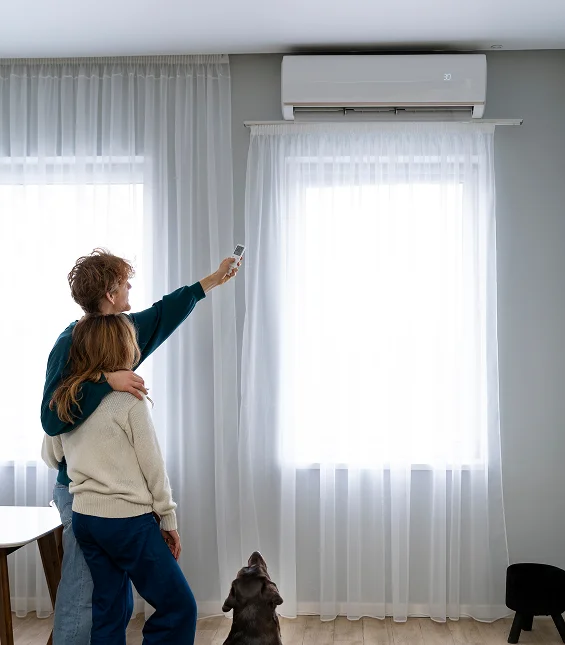
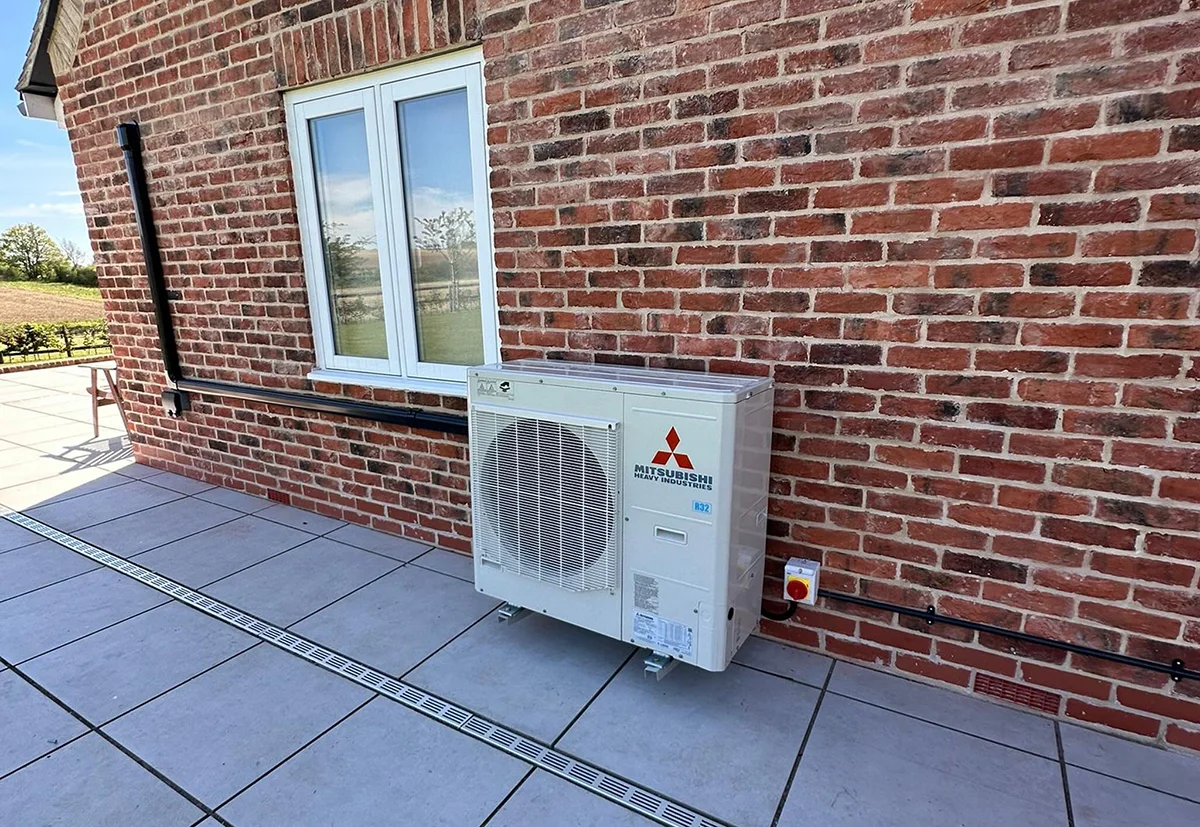
A split system air conditioner consists of two main components: an indoor unit and an outdoor unit. The indoor unit circulates conditioned air around the room, while the outdoor unit helps transfer heat between the property and the outside environment.
The two units are connected by refrigerant pipework, alongside the necessary electrical connections and condensate drainage arrangements. Unlike a portable air conditioner, a fixed split system does not normally need a large exhaust hose running through an open window.
Most residential systems use a wall-mounted indoor unit, although other designs are available. The best configuration depends on the room, the desired appearance and the available installation space.
For homeowners researching air conditioning, understanding this basic arrangement helps explain why professional positioning and installation matter so much.
How Does Split System Air Conditioning Work?
A split system moves heat rather than simply producing cold air. During cooling, refrigerant absorbs heat from the indoor air and carries it to the outdoor unit, where that heat is released outside.
The indoor unit then circulates cooler air back into the room. This cycle continues until the system reaches the target temperature or adjusts its output to maintain comfortable conditions.
Many modern systems use inverter technology, which allows the compressor to vary its output according to demand. Rather than repeatedly operating at full capacity and switching off, an inverter system can adjust its operation to help maintain a steadier indoor temperature.
Some models also provide heating through reverse-cycle heat pump technology. In heating mode, the refrigerant cycle reverses, allowing the system to transfer heat from the outdoor air into the home.
This can make a split system useful beyond summer, although its heating suitability depends on the model, outdoor conditions and the property’s requirements.
Is a Split System Suitable for Your Home?
A split system can be particularly suitable when you want to control the temperature of a specific room without cooling the entire property.
Common applications include:
- Bedrooms: Targeted cooling can help manage uncomfortable temperatures during warmer nights.
- Home offices: A dedicated unit can improve comfort where computers, equipment and sunlight add heat.
- Living rooms: The right capacity and position can make frequently used spaces more comfortable.
- Loft conversions: A suitable system may help manage heat build-up beneath the roof.
- Garden rooms: A properly specified unit can provide year-round temperature control where the building and installation allow it.
However, a single indoor unit will not necessarily cool several closed rooms effectively. Airflow can be restricted by walls, doorways and the layout of the property.
Before choosing equipment, identify the areas that genuinely need cooling. This helps determine whether one unit is sufficient or whether a multi-room arrangement would be more appropriate.
If you are uncertain whether a split system suits your property, We Cool & Heat can help you explore the available options and assess your room requirements before you commit to an installation.
What Is the Difference Between Single-Split and Multi-Split Systems?
The distinction is mainly the number of indoor units connected to the outdoor equipment.
| Feature | Single-split system | Multi-split system |
|---|---|---|
| Indoor units | One | Two or more, depending on the model |
| Typical application | One bedroom or living space | Several rooms |
| Temperature control | Dedicated control for the served room | Individual indoor units can often be controlled separately |
| Installation considerations | One indoor location and its connections | More complex pipework and equipment planning |
| Main advantage | Targeted cooling with a relatively straightforward layout | Multiple rooms can be served by one outdoor unit |
| Main limitation | Does not directly condition other rooms | Suitability depends on combined capacity and manufacturer limits |
A single-split arrangement may be a sensible starting point when one room causes most of the discomfort. A multi-split setup may be worth considering when several rooms need independent temperature control but outdoor space is limited.
However, connecting several indoor units to one outdoor unit does not automatically make installation cheaper. Equipment capacity, pipework distances, installation complexity and the number of rooms all affect the final price.
Where Should the Indoor and Outdoor Units Be Installed?
Correct positioning affects comfort, noise, airflow and maintenance access. The proposed locations should therefore be considered as part of the initial assessment, rather than decided at the last minute.
Choosing the indoor unit position
The indoor unit should have sufficient clearance for air to circulate freely. It should not be obstructed by tall furniture, curtains or shelving, and the airflow should be directed to distribute conditioned air effectively.
In a bedroom, the installer should consider the bed position and avoid placing the unit where its airflow is likely to cause discomfort during sleep. In a living room, the arrangement of seating and the shape of the space may influence the best location.
Finding a suitable outdoor position
The outdoor unit needs adequate airflow, a stable mounting arrangement and access for future maintenance. The installer should consider vibration, operating noise and the effect on neighbouring properties.
Pipework routes also matter. Longer or more complicated routes can affect installation requirements, so the proposed layout should be explained before work begins.
The installation may need to account for drainage, electrical connections, wall construction and any relevant planning restrictions. These details vary by property and equipment type.
How Much Does Split System Air Conditioning Cost in Trowbridge?
The split system air conditioning cost in Trowbridge depends on the system’s capacity, the number of units, the complexity of the installation and the equipment selected. There is no single price that applies to every home.
The main cost factors include:
- Cooling capacity: Larger rooms or spaces with significant heat gain may require more powerful equipment.
- Equipment specification: Brand, efficiency, controls, noise performance and additional features can affect the price.
- Number of rooms: A multi-split arrangement generally involves more equipment and connections than a single-room system.
- Installation access: Difficult access or complicated pipework routes can increase labour requirements.
- Electrical work: The existing supply and any additional work needed can influence the quotation.
- Drainage and finishing: The route for condensate and the treatment of wall penetrations may affect the scope of work.
When comparing quotations, check whether each includes the same equipment, installation work, commissioning and handover. A cheaper headline price may exclude items included in another proposal.
We Cool & Heat can discuss the requirements of your property and help you understand the factors that influence installation pricing. Ask for a quotation that clearly explains the equipment, work included and any exclusions.
What Should You Check Before Choosing an Installer?
A suitable system depends on good installation as well as appropriate equipment. Before proceeding, make sure the installer has assessed the room and explained why the proposed unit is suitable.
Useful questions include:
- How was the recommended cooling capacity calculated?
- Where will the indoor and outdoor units be positioned?
- What electrical and drainage work is required?
- Is commissioning included in the quoted price?
- What warranties apply to the equipment and installation?
- What routine maintenance will the manufacturer recommend?
- Will you receive instructions on operating and caring for the system?
It is also sensible to clarify the expected installation timescale and how the installer will protect the work area. A clear explanation at this stage helps you understand what to expect and reduces the likelihood of surprises.
How Can You Keep a Split System Working Efficiently?
Regular care helps maintain airflow and gives you an opportunity to spot potential problems before they become more disruptive.
Follow the manufacturer’s instructions for cleaning accessible filters, and avoid allowing furniture or other objects to block the indoor unit. Keep the outdoor unit clear of leaves and other obstructions, provided it is safe to do so.
Professional maintenance should follow the equipment manufacturer’s recommendations and take account of how frequently the system is used. An installer can advise on suitable servicing arrangements and explain what signs may indicate that attention is needed.
If the system starts producing unusual noises, shows persistent error messages or stops cooling properly, arrange an assessment rather than repeatedly resetting it. Never remove covers or attempt work on refrigerant circuits yourself.
Related articles



Which of these best describes your property?

Detached

Semi Detached

Terrace

Flat

Bungalow

Static Homes

Commercial or small office
Split System Air Conditioning Explained for Trowbridge Homeowners
A bedroom that stays warm long after sunset or a home office that becomes uncomfortable by lunchtime can make summer harder to manage. When opening windows and using fans no longer provide enough relief, a fixed air conditioning system may be worth considering.
Split system air conditioning is a popular option because it can provide targeted temperature control without requiring a network of ducts throughout the property. However, choosing the right system involves more than selecting a unit that looks suitable. Room size, heat gain, equipment positioning and installation requirements all influence how well it performs.
What Is a Split System Air Conditioner?
A split system air conditioner consists of two main components: an indoor unit and an outdoor unit. The indoor unit circulates conditioned air around the room, while the outdoor unit helps transfer heat between the property and the outside environment.
The two units are connected by refrigerant pipework, alongside the necessary electrical connections and condensate drainage arrangements. Unlike a portable air conditioner, a fixed split system does not normally need a large exhaust hose running through an open window.
Most residential systems use a wall-mounted indoor unit, although other designs are available. The best configuration depends on the room, the desired appearance and the available installation space.
For homeowners researching air conditioning, understanding this basic arrangement helps explain why professional positioning and installation matter so much.
How Does Split System Air Conditioning Work?
A split system moves heat rather than simply producing cold air. During cooling, refrigerant absorbs heat from the indoor air and carries it to the outdoor unit, where that heat is released outside.
The indoor unit then circulates cooler air back into the room. This cycle continues until the system reaches the target temperature or adjusts its output to maintain comfortable conditions.
Many modern systems use inverter technology, which allows the compressor to vary its output according to demand. Rather than repeatedly operating at full capacity and switching off, an inverter system can adjust its operation to help maintain a steadier indoor temperature.
Some models also provide heating through reverse-cycle heat pump technology. In heating mode, the refrigerant cycle reverses, allowing the system to transfer heat from the outdoor air into the home.
This can make a split system useful beyond summer, although its heating suitability depends on the model, outdoor conditions and the property’s requirements.
Is a Split System Suitable for Your Home?
A split system can be particularly suitable when you want to control the temperature of a specific room without cooling the entire property.
Common applications include:
- Bedrooms: Targeted cooling can help manage uncomfortable temperatures during warmer nights.
- Home offices: A dedicated unit can improve comfort where computers, equipment and sunlight add heat.
- Living rooms: The right capacity and position can make frequently used spaces more comfortable.
- Loft conversions: A suitable system may help manage heat build-up beneath the roof.
- Garden rooms: A properly specified unit can provide year-round temperature control where the building and installation allow it.
However, a single indoor unit will not necessarily cool several closed rooms effectively. Airflow can be restricted by walls, doorways and the layout of the property.
Before choosing equipment, identify the areas that genuinely need cooling. This helps determine whether one unit is sufficient or whether a multi-room arrangement would be more appropriate.
If you are uncertain whether a split system suits your property, We Cool & Heat can help you explore the available options and assess your room requirements before you commit to an installation.
What Is the Difference Between Single-Split and Multi-Split Systems?
The distinction is mainly the number of indoor units connected to the outdoor equipment.
| Feature | Single-split system | Multi-split system |
|---|---|---|
| Indoor units | One | Two or more, depending on the model |
| Typical application | One bedroom or living space | Several rooms |
| Temperature control | Dedicated control for the served room | Individual indoor units can often be controlled separately |
| Installation considerations | One indoor location and its connections | More complex pipework and equipment planning |
| Main advantage | Targeted cooling with a relatively straightforward layout | Multiple rooms can be served by one outdoor unit |
| Main limitation | Does not directly condition other rooms | Suitability depends on combined capacity and manufacturer limits |
A single-split arrangement may be a sensible starting point when one room causes most of the discomfort. A multi-split setup may be worth considering when several rooms need independent temperature control but outdoor space is limited.
However, connecting several indoor units to one outdoor unit does not automatically make installation cheaper. Equipment capacity, pipework distances, installation complexity and the number of rooms all affect the final price.
Where Should the Indoor and Outdoor Units Be Installed?
Correct positioning affects comfort, noise, airflow and maintenance access. The proposed locations should therefore be considered as part of the initial assessment, rather than decided at the last minute.
Choosing the indoor unit position
The indoor unit should have sufficient clearance for air to circulate freely. It should not be obstructed by tall furniture, curtains or shelving, and the airflow should be directed to distribute conditioned air effectively.
In a bedroom, the installer should consider the bed position and avoid placing the unit where its airflow is likely to cause discomfort during sleep. In a living room, the arrangement of seating and the shape of the space may influence the best location.
Finding a suitable outdoor position
The outdoor unit needs adequate airflow, a stable mounting arrangement and access for future maintenance. The installer should consider vibration, operating noise and the effect on neighbouring properties.
Pipework routes also matter. Longer or more complicated routes can affect installation requirements, so the proposed layout should be explained before work begins.
The installation may need to account for drainage, electrical connections, wall construction and any relevant planning restrictions. These details vary by property and equipment type.
How Much Does Split System Air Conditioning Cost in Trowbridge?
The split system air conditioning cost in Trowbridge depends on the system’s capacity, the number of units, the complexity of the installation and the equipment selected. There is no single price that applies to every home.
The main cost factors include:
- Cooling capacity: Larger rooms or spaces with significant heat gain may require more powerful equipment.
- Equipment specification: Brand, efficiency, controls, noise performance and additional features can affect the price.
- Number of rooms: A multi-split arrangement generally involves more equipment and connections than a single-room system.
- Installation access: Difficult access or complicated pipework routes can increase labour requirements.
- Electrical work: The existing supply and any additional work needed can influence the quotation.
- Drainage and finishing: The route for condensate and the treatment of wall penetrations may affect the scope of work.
When comparing quotations, check whether each includes the same equipment, installation work, commissioning and handover. A cheaper headline price may exclude items included in another proposal.
We Cool & Heat can discuss the requirements of your property and help you understand the factors that influence installation pricing. Ask for a quotation that clearly explains the equipment, work included and any exclusions.
What Should You Check Before Choosing an Installer?
A suitable system depends on good installation as well as appropriate equipment. Before proceeding, make sure the installer has assessed the room and explained why the proposed unit is suitable.
Useful questions include:
- How was the recommended cooling capacity calculated?
- Where will the indoor and outdoor units be positioned?
- What electrical and drainage work is required?
- Is commissioning included in the quoted price?
- What warranties apply to the equipment and installation?
- What routine maintenance will the manufacturer recommend?
- Will you receive instructions on operating and caring for the system?
It is also sensible to clarify the expected installation timescale and how the installer will protect the work area. A clear explanation at this stage helps you understand what to expect and reduces the likelihood of surprises.
How Can You Keep a Split System Working Efficiently?
Regular care helps maintain airflow and gives you an opportunity to spot potential problems before they become more disruptive.
Follow the manufacturer’s instructions for cleaning accessible filters, and avoid allowing furniture or other objects to block the indoor unit. Keep the outdoor unit clear of leaves and other obstructions, provided it is safe to do so.
Professional maintenance should follow the equipment manufacturer’s recommendations and take account of how frequently the system is used. An installer can advise on suitable servicing arrangements and explain what signs may indicate that attention is needed.
If the system starts producing unusual noises, shows persistent error messages or stops cooling properly, arrange an assessment rather than repeatedly resetting it. Never remove covers or attempt work on refrigerant circuits yourself.
Related articles
Which of these best describes your property?
Detached
Semi Detached
Terrace
Flat
Bungalow
Static Homes
Commercial or small office
At a glance
Split System Air Conditioning Explained for Trowbridge Homeowners
A bedroom that stays warm long after sunset or a home office that becomes uncomfortable by lunchtime can make summer harder to manage. When opening windows and using fans no longer provide enough relief, a fixed air conditioning system may be worth considering.
Split system air conditioning is a popular option because it can provide targeted temperature control without requiring a network of ducts throughout the property. However, choosing the right system involves more than selecting a unit that looks suitable. Room size, heat gain, equipment positioning and installation requirements all influence how well it performs.
What Is a Split System Air Conditioner?
A split system air conditioner consists of two main components: an indoor unit and an outdoor unit. The indoor unit circulates conditioned air around the room, while the outdoor unit helps transfer heat between the property and the outside environment.
The two units are connected by refrigerant pipework, alongside the necessary electrical connections and condensate drainage arrangements. Unlike a portable air conditioner, a fixed split system does not normally need a large exhaust hose running through an open window.
Most residential systems use a wall-mounted indoor unit, although other designs are available. The best configuration depends on the room, the desired appearance and the available installation space.
For homeowners researching air conditioning, understanding this basic arrangement helps explain why professional positioning and installation matter so much.
How Does Split System Air Conditioning Work?
A split system moves heat rather than simply producing cold air. During cooling, refrigerant absorbs heat from the indoor air and carries it to the outdoor unit, where that heat is released outside.
The indoor unit then circulates cooler air back into the room. This cycle continues until the system reaches the target temperature or adjusts its output to maintain comfortable conditions.
Many modern systems use inverter technology, which allows the compressor to vary its output according to demand. Rather than repeatedly operating at full capacity and switching off, an inverter system can adjust its operation to help maintain a steadier indoor temperature.
Some models also provide heating through reverse-cycle heat pump technology. In heating mode, the refrigerant cycle reverses, allowing the system to transfer heat from the outdoor air into the home.
This can make a split system useful beyond summer, although its heating suitability depends on the model, outdoor conditions and the property’s requirements.
Is a Split System Suitable for Your Home?
A split system can be particularly suitable when you want to control the temperature of a specific room without cooling the entire property.
Common applications include:
- Bedrooms: Targeted cooling can help manage uncomfortable temperatures during warmer nights.
- Home offices: A dedicated unit can improve comfort where computers, equipment and sunlight add heat.
- Living rooms: The right capacity and position can make frequently used spaces more comfortable.
- Loft conversions: A suitable system may help manage heat build-up beneath the roof.
- Garden rooms: A properly specified unit can provide year-round temperature control where the building and installation allow it.
However, a single indoor unit will not necessarily cool several closed rooms effectively. Airflow can be restricted by walls, doorways and the layout of the property.
Before choosing equipment, identify the areas that genuinely need cooling. This helps determine whether one unit is sufficient or whether a multi-room arrangement would be more appropriate.
If you are uncertain whether a split system suits your property, We Cool & Heat can help you explore the available options and assess your room requirements before you commit to an installation.
What Is the Difference Between Single-Split and Multi-Split Systems?
The distinction is mainly the number of indoor units connected to the outdoor equipment.
| Feature | Single-split system | Multi-split system |
|---|---|---|
| Indoor units | One | Two or more, depending on the model |
| Typical application | One bedroom or living space | Several rooms |
| Temperature control | Dedicated control for the served room | Individual indoor units can often be controlled separately |
| Installation considerations | One indoor location and its connections | More complex pipework and equipment planning |
| Main advantage | Targeted cooling with a relatively straightforward layout | Multiple rooms can be served by one outdoor unit |
| Main limitation | Does not directly condition other rooms | Suitability depends on combined capacity and manufacturer limits |
A single-split arrangement may be a sensible starting point when one room causes most of the discomfort. A multi-split setup may be worth considering when several rooms need independent temperature control but outdoor space is limited.
However, connecting several indoor units to one outdoor unit does not automatically make installation cheaper. Equipment capacity, pipework distances, installation complexity and the number of rooms all affect the final price.
Where Should the Indoor and Outdoor Units Be Installed?
Correct positioning affects comfort, noise, airflow and maintenance access. The proposed locations should therefore be considered as part of the initial assessment, rather than decided at the last minute.
Choosing the indoor unit position
The indoor unit should have sufficient clearance for air to circulate freely. It should not be obstructed by tall furniture, curtains or shelving, and the airflow should be directed to distribute conditioned air effectively.
In a bedroom, the installer should consider the bed position and avoid placing the unit where its airflow is likely to cause discomfort during sleep. In a living room, the arrangement of seating and the shape of the space may influence the best location.
Finding a suitable outdoor position
The outdoor unit needs adequate airflow, a stable mounting arrangement and access for future maintenance. The installer should consider vibration, operating noise and the effect on neighbouring properties.
Pipework routes also matter. Longer or more complicated routes can affect installation requirements, so the proposed layout should be explained before work begins.
The installation may need to account for drainage, electrical connections, wall construction and any relevant planning restrictions. These details vary by property and equipment type.
How Much Does Split System Air Conditioning Cost in Trowbridge?
The split system air conditioning cost in Trowbridge depends on the system’s capacity, the number of units, the complexity of the installation and the equipment selected. There is no single price that applies to every home.
The main cost factors include:
- Cooling capacity: Larger rooms or spaces with significant heat gain may require more powerful equipment.
- Equipment specification: Brand, efficiency, controls, noise performance and additional features can affect the price.
- Number of rooms: A multi-split arrangement generally involves more equipment and connections than a single-room system.
- Installation access: Difficult access or complicated pipework routes can increase labour requirements.
- Electrical work: The existing supply and any additional work needed can influence the quotation.
- Drainage and finishing: The route for condensate and the treatment of wall penetrations may affect the scope of work.
When comparing quotations, check whether each includes the same equipment, installation work, commissioning and handover. A cheaper headline price may exclude items included in another proposal.
We Cool & Heat can discuss the requirements of your property and help you understand the factors that influence installation pricing. Ask for a quotation that clearly explains the equipment, work included and any exclusions.
What Should You Check Before Choosing an Installer?
A suitable system depends on good installation as well as appropriate equipment. Before proceeding, make sure the installer has assessed the room and explained why the proposed unit is suitable.
Useful questions include:
- How was the recommended cooling capacity calculated?
- Where will the indoor and outdoor units be positioned?
- What electrical and drainage work is required?
- Is commissioning included in the quoted price?
- What warranties apply to the equipment and installation?
- What routine maintenance will the manufacturer recommend?
- Will you receive instructions on operating and caring for the system?
It is also sensible to clarify the expected installation timescale and how the installer will protect the work area. A clear explanation at this stage helps you understand what to expect and reduces the likelihood of surprises.
How Can You Keep a Split System Working Efficiently?
Regular care helps maintain airflow and gives you an opportunity to spot potential problems before they become more disruptive.
Follow the manufacturer’s instructions for cleaning accessible filters, and avoid allowing furniture or other objects to block the indoor unit. Keep the outdoor unit clear of leaves and other obstructions, provided it is safe to do so.
Professional maintenance should follow the equipment manufacturer’s recommendations and take account of how frequently the system is used. An installer can advise on suitable servicing arrangements and explain what signs may indicate that attention is needed.
If the system starts producing unusual noises, shows persistent error messages or stops cooling properly, arrange an assessment rather than repeatedly resetting it. Never remove covers or attempt work on refrigerant circuits yourself.
Related articles
Which of these best describes your property?
Detached
Semi Detached
Terrace
Flat
Bungalow
Static Homes
Commercial or small office