What Are Smart Air Conditioners and Are They Worth Installing?
The term “smart” gets attached to all kinds of home technology these days, and air conditioning is no exception. Smart air conditioners offer a step up from conventional systems in terms of how you control them, monitor them and integrate them with the rest of your home. But with added technology comes added cost, and not everyone needs every feature on offer.

Why you can trust our content
We understand that the air conditioning industry can be confusing, with plenty of outdated or misleading information. That’s why we rely only on trusted, proven sources to guide our advice, system recommendations, and installations.





Can I Upgrade My Existing Air Conditioning to Smart?
This guide breaks down what smart air conditioning actually involves, how it differs from a standard system and whether the upgrade is genuinely worthwhile for most homeowners and small businesses.
If you’re considering a new air conditioner for your home or office, you can request a bespoke quote from the team at We Cool & Heat.
What Makes an Air Conditioner “Smart”?
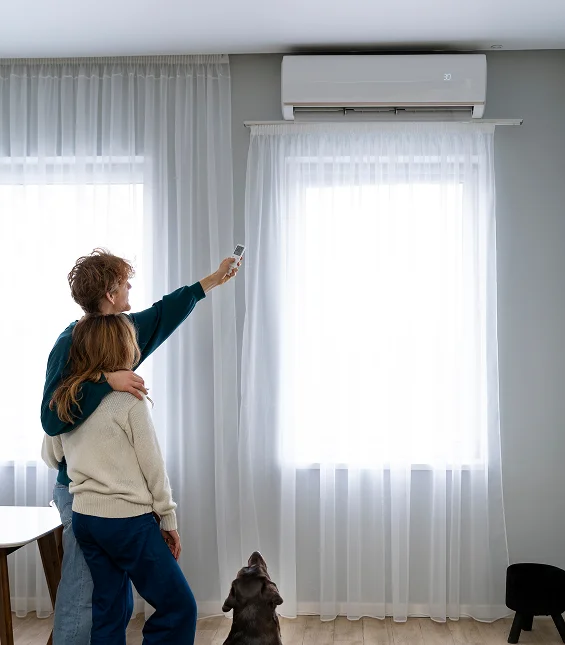
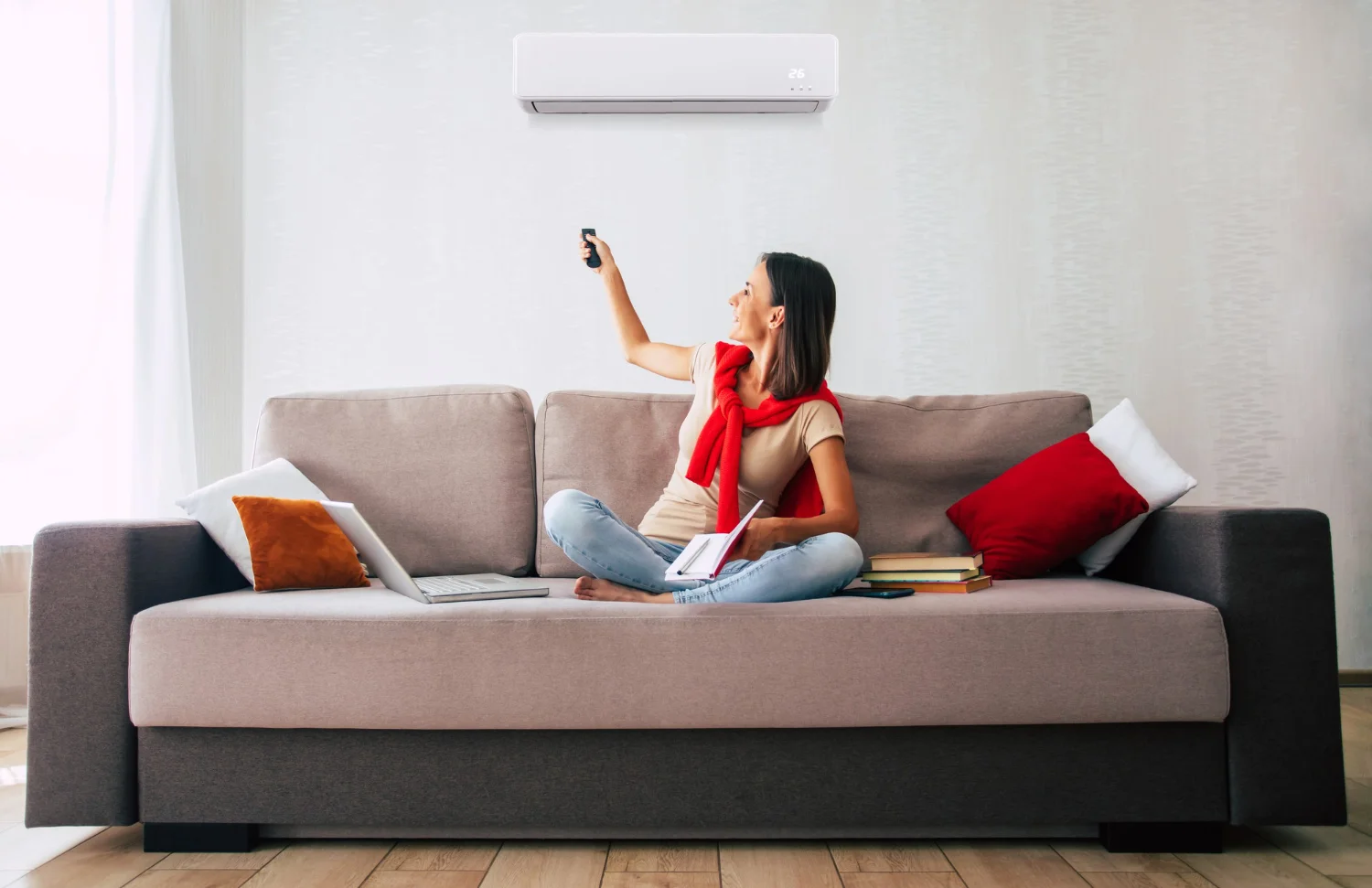
A smart air conditioner is one that connects to your home’s Wi-Fi network and can be controlled remotely through a smartphone app, a voice assistant or a smart home platform. Beyond remote control, many smart systems offer scheduling, energy usage tracking, occupancy-based automation and integration with devices such as Amazon Alexa or Google Home.
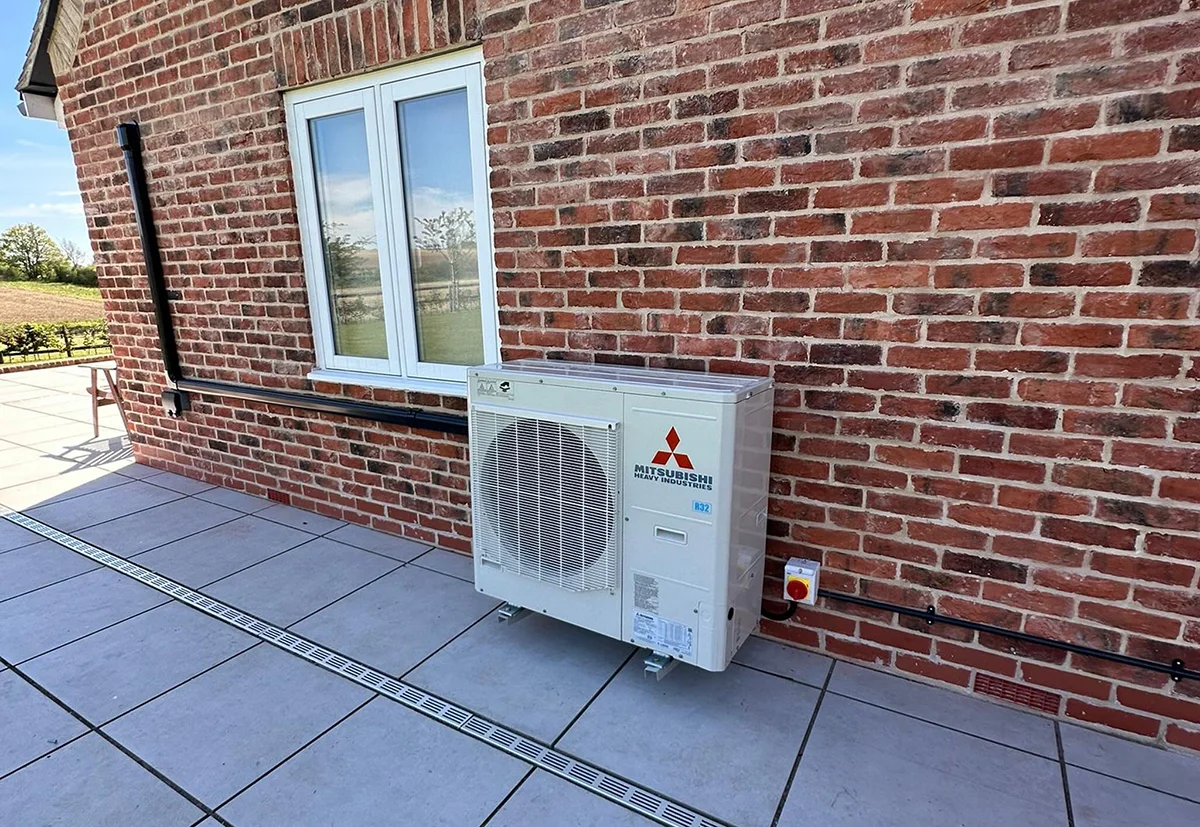
Some units have built-in smart features as standard, while others can be upgraded using a smart controller or adaptor that sits between the unit and your Wi-Fi network. Brands such as Mitsubishi, Daikin and Worcester Bosch have developed app-based control systems for many of their current product ranges, making smart functionality increasingly accessible without requiring a premium system from the outset.
Key Features of Smart Air Conditioning Systems
Understanding what these systems actually do helps clarify whether they’re genuinely useful for your lifestyle or simply an appealing extra:
- Remote control via smartphone: Adjust temperature and mode from anywhere, meaning you can cool or warm the room before you arrive home
- Scheduling: Set the system to run at specific times without needing to be present
- Energy monitoring: Track usage patterns and identify when the system is working harder than expected
- Geofencing: Some systems detect when you leave or approach home and adjust accordingly
- Integration with smart thermostats: Coordinate your air conditioning with other heating and cooling elements in the property
- Maintenance alerts: Some systems flag when a filter needs cleaning or when a fault code appears, before you’d necessarily notice a problem
Are Smart Air Conditioners More Efficient?
This is a fair question. The honest answer is that smart controls don’t make the refrigeration system inside the unit more efficient by themselves. The efficiency of an air conditioner is determined by the technology in the unit, primarily whether it uses inverter-driven compressor technology, which adjusts output in response to demand rather than simply switching on and off at full power.
What smart controls can do is help you use the system more efficiently. If you’re in the habit of leaving the air conditioning running in an empty room, the ability to switch it off remotely or set a schedule to avoid that situation will reduce unnecessary running time. That’s a genuine benefit, but it comes from better habits enabled by the technology rather than from the technology itself making the compressor more efficient.
|
Smart Feature |
Practical Benefit |
Who Benefits Most |
|
Remote app control |
Adjust settings from anywhere |
Commuters and frequent travellers |
|
Scheduling |
Automated comfort without manual input |
Households with regular routines |
|
Energy monitoring |
Visibility of usage patterns |
Those managing running costs carefully |
|
Voice control |
Hands-free convenience |
Smart home users |
|
Maintenance alerts |
Early fault detection |
Anyone wanting peace of mind |
|
Geofencing |
Automatic on/off based on location |
Those with unpredictable schedules |
Which of these best describes your property?
 Detached
 Semi Detached
 Terrace House
 Flat
 Bungalow
 Static Homes
 Commercial or small office
It just takes 60 Sec
And then you can book a free consultation
What Are the Limitations of Smart Air Conditioners?
Smart functionality relies on a stable Wi-Fi connection and, in most cases, a compatible smartphone. If your broadband is unreliable or you’d prefer not to manage home technology through an app, the smart features simply won’t be of much practical use.
There’s also the question of compatibility. Not all smart controllers work with all systems, so it’s important to confirm that any add-on controller is compatible with your specific unit before purchasing. Fitting the wrong adaptor can at best result in limited functionality and at worst cause communication errors with the unit’s control board.
A qualified engineer fitting your system can advise on which control options are natively compatible and whether an add-on controller is a practical route for your existing or new unit.
Is a Smart Air Conditioner Worth the Investment?
For most homeowners, the answer depends on how they live. If you value the convenience of controlling your home environment from your phone, appreciate the visibility of energy data and already use smart home technology elsewhere in your property, a smart air conditioning system is a worthwhile upgrade that will see daily use.
If, on the other hand, you have a straightforward routine and would be happy setting a timer and adjusting the temperature manually when you need to, the additional cost of smart features may not deliver proportionate value. A well-fitted, efficiently specified conventional system will still perform excellently.
The key is to have an honest conversation with your installer about how you actually live and what you’d genuinely use. That’s the most reliable way to decide whether smart is the right fit for your home. Local air conditioning fitters in Chippenham with experience across a range of system types can help you make that call without overselling features you won’t need.
Smart air conditioners offer genuine convenience and useful features for the right kind of user. Remote control, scheduling and energy monitoring all add practical value, particularly for busy households and small businesses. Whether those features justify the additional investment depends on your lifestyle and how you’d realistically use them.
We Cool & Heat help homeowners and businesses across Chippenham and the wider Wiltshire area choose and fit the right air conditioning system for their needs. Get in touch today and we’ll help you find the best solution, smart or otherwise.
Related articles

Which of these best describes your property?
Detached
Semi Detached
Terrace
Flat
Bungalow
Static Homes
Commercial or small office
This guide breaks down what smart air conditioning actually involves, how it differs from a standard system and whether the upgrade is genuinely worthwhile for most homeowners and small businesses.
If you’re considering a new air conditioner for your home or office, you can request a bespoke quote from the team at We Cool & Heat.
What Makes an Air Conditioner “Smart”?
A smart air conditioner is one that connects to your home’s Wi-Fi network and can be controlled remotely through a smartphone app, a voice assistant or a smart home platform. Beyond remote control, many smart systems offer scheduling, energy usage tracking, occupancy-based automation and integration with devices such as Amazon Alexa or Google Home.
Some units have built-in smart features as standard, while others can be upgraded using a smart controller or adaptor that sits between the unit and your Wi-Fi network. Brands such as Mitsubishi, Daikin and Worcester Bosch have developed app-based control systems for many of their current product ranges, making smart functionality increasingly accessible without requiring a premium system from the outset.
Key Features of Smart Air Conditioning Systems
Understanding what these systems actually do helps clarify whether they’re genuinely useful for your lifestyle or simply an appealing extra:
- Remote control via smartphone: Adjust temperature and mode from anywhere, meaning you can cool or warm the room before you arrive home
- Scheduling: Set the system to run at specific times without needing to be present
- Energy monitoring: Track usage patterns and identify when the system is working harder than expected
- Geofencing: Some systems detect when you leave or approach home and adjust accordingly
- Integration with smart thermostats: Coordinate your air conditioning with other heating and cooling elements in the property
- Maintenance alerts: Some systems flag when a filter needs cleaning or when a fault code appears, before you’d necessarily notice a problem
Are Smart Air Conditioners More Efficient?
This is a fair question. The honest answer is that smart controls don’t make the refrigeration system inside the unit more efficient by themselves. The efficiency of an air conditioner is determined by the technology in the unit, primarily whether it uses inverter-driven compressor technology, which adjusts output in response to demand rather than simply switching on and off at full power.
What smart controls can do is help you use the system more efficiently. If you’re in the habit of leaving the air conditioning running in an empty room, the ability to switch it off remotely or set a schedule to avoid that situation will reduce unnecessary running time. That’s a genuine benefit, but it comes from better habits enabled by the technology rather than from the technology itself making the compressor more efficient.
|
Smart Feature |
Practical Benefit |
Who Benefits Most |
|
Remote app control |
Adjust settings from anywhere |
Commuters and frequent travellers |
|
Scheduling |
Automated comfort without manual input |
Households with regular routines |
|
Energy monitoring |
Visibility of usage patterns |
Those managing running costs carefully |
|
Voice control |
Hands-free convenience |
Smart home users |
|
Maintenance alerts |
Early fault detection |
Anyone wanting peace of mind |
|
Geofencing |
Automatic on/off based on location |
Those with unpredictable schedules |
Which of these best describes your property?
Detached
Semi Detached
Terrace House
Flat
Bungalow
Static Homes
Commercial or small office
It just takes 60 Sec
And then you can book a free consultation
What Are the Limitations of Smart Air Conditioners?
Smart functionality relies on a stable Wi-Fi connection and, in most cases, a compatible smartphone. If your broadband is unreliable or you’d prefer not to manage home technology through an app, the smart features simply won’t be of much practical use.
There’s also the question of compatibility. Not all smart controllers work with all systems, so it’s important to confirm that any add-on controller is compatible with your specific unit before purchasing. Fitting the wrong adaptor can at best result in limited functionality and at worst cause communication errors with the unit’s control board.
A qualified engineer fitting your system can advise on which control options are natively compatible and whether an add-on controller is a practical route for your existing or new unit.
Is a Smart Air Conditioner Worth the Investment?
For most homeowners, the answer depends on how they live. If you value the convenience of controlling your home environment from your phone, appreciate the visibility of energy data and already use smart home technology elsewhere in your property, a smart air conditioning system is a worthwhile upgrade that will see daily use.
If, on the other hand, you have a straightforward routine and would be happy setting a timer and adjusting the temperature manually when you need to, the additional cost of smart features may not deliver proportionate value. A well-fitted, efficiently specified conventional system will still perform excellently.
The key is to have an honest conversation with your installer about how you actually live and what you’d genuinely use. That’s the most reliable way to decide whether smart is the right fit for your home. Local air conditioning fitters in Chippenham with experience across a range of system types can help you make that call without overselling features you won’t need.
Smart air conditioners offer genuine convenience and useful features for the right kind of user. Remote control, scheduling and energy monitoring all add practical value, particularly for busy households and small businesses. Whether those features justify the additional investment depends on your lifestyle and how you’d realistically use them.
We Cool & Heat help homeowners and businesses across Chippenham and the wider Wiltshire area choose and fit the right air conditioning system for their needs. Get in touch today and we’ll help you find the best solution, smart or otherwise.
Related articles
Which of these best describes your property?
Detached
Semi Detached
Terrace
Flat
Bungalow
Static Homes
Commercial or small office
Can I Upgrade My Existing Air Conditioning to Smart?
This guide breaks down what smart air conditioning actually involves, how it differs from a standard system and whether the upgrade is genuinely worthwhile for most homeowners and small businesses.
If you’re considering a new air conditioner for your home or office, you can request a bespoke quote from the team at We Cool & Heat.
What Makes an Air Conditioner “Smart”?
A smart air conditioner is one that connects to your home’s Wi-Fi network and can be controlled remotely through a smartphone app, a voice assistant or a smart home platform. Beyond remote control, many smart systems offer scheduling, energy usage tracking, occupancy-based automation and integration with devices such as Amazon Alexa or Google Home.
Some units have built-in smart features as standard, while others can be upgraded using a smart controller or adaptor that sits between the unit and your Wi-Fi network. Brands such as Mitsubishi, Daikin and Worcester Bosch have developed app-based control systems for many of their current product ranges, making smart functionality increasingly accessible without requiring a premium system from the outset.
Key Features of Smart Air Conditioning Systems
Understanding what these systems actually do helps clarify whether they’re genuinely useful for your lifestyle or simply an appealing extra:
- Remote control via smartphone: Adjust temperature and mode from anywhere, meaning you can cool or warm the room before you arrive home
- Scheduling: Set the system to run at specific times without needing to be present
- Energy monitoring: Track usage patterns and identify when the system is working harder than expected
- Geofencing: Some systems detect when you leave or approach home and adjust accordingly
- Integration with smart thermostats: Coordinate your air conditioning with other heating and cooling elements in the property
- Maintenance alerts: Some systems flag when a filter needs cleaning or when a fault code appears, before you’d necessarily notice a problem
Are Smart Air Conditioners More Efficient?
This is a fair question. The honest answer is that smart controls don’t make the refrigeration system inside the unit more efficient by themselves. The efficiency of an air conditioner is determined by the technology in the unit, primarily whether it uses inverter-driven compressor technology, which adjusts output in response to demand rather than simply switching on and off at full power.
What smart controls can do is help you use the system more efficiently. If you’re in the habit of leaving the air conditioning running in an empty room, the ability to switch it off remotely or set a schedule to avoid that situation will reduce unnecessary running time. That’s a genuine benefit, but it comes from better habits enabled by the technology rather than from the technology itself making the compressor more efficient.
|
Smart Feature |
Practical Benefit |
Who Benefits Most |
|
Remote app control |
Adjust settings from anywhere |
Commuters and frequent travellers |
|
Scheduling |
Automated comfort without manual input |
Households with regular routines |
|
Energy monitoring |
Visibility of usage patterns |
Those managing running costs carefully |
|
Voice control |
Hands-free convenience |
Smart home users |
|
Maintenance alerts |
Early fault detection |
Anyone wanting peace of mind |
|
Geofencing |
Automatic on/off based on location |
Those with unpredictable schedules |
Which of these best describes your property?
Detached
Semi Detached
Terrace House
Flat
Bungalow
Static Homes
Commercial or small office
It just takes 60 Sec
And then you can book a free consultation
What Are the Limitations of Smart Air Conditioners?
Smart functionality relies on a stable Wi-Fi connection and, in most cases, a compatible smartphone. If your broadband is unreliable or you’d prefer not to manage home technology through an app, the smart features simply won’t be of much practical use.
There’s also the question of compatibility. Not all smart controllers work with all systems, so it’s important to confirm that any add-on controller is compatible with your specific unit before purchasing. Fitting the wrong adaptor can at best result in limited functionality and at worst cause communication errors with the unit’s control board.
A qualified engineer fitting your system can advise on which control options are natively compatible and whether an add-on controller is a practical route for your existing or new unit.
Is a Smart Air Conditioner Worth the Investment?
For most homeowners, the answer depends on how they live. If you value the convenience of controlling your home environment from your phone, appreciate the visibility of energy data and already use smart home technology elsewhere in your property, a smart air conditioning system is a worthwhile upgrade that will see daily use.
If, on the other hand, you have a straightforward routine and would be happy setting a timer and adjusting the temperature manually when you need to, the additional cost of smart features may not deliver proportionate value. A well-fitted, efficiently specified conventional system will still perform excellently.
The key is to have an honest conversation with your installer about how you actually live and what you’d genuinely use. That’s the most reliable way to decide whether smart is the right fit for your home. Local air conditioning fitters in Chippenham with experience across a range of system types can help you make that call without overselling features you won’t need.
Smart air conditioners offer genuine convenience and useful features for the right kind of user. Remote control, scheduling and energy monitoring all add practical value, particularly for busy households and small businesses. Whether those features justify the additional investment depends on your lifestyle and how you’d realistically use them.
We Cool & Heat help homeowners and businesses across Chippenham and the wider Wiltshire area choose and fit the right air conditioning system for their needs. Get in touch today and we’ll help you find the best solution, smart or otherwise.
Related articles
Which of these best describes your property?
Detached
Semi Detached
Terrace
Flat
Bungalow
Static Homes
Commercial or small office