Air Conditioning vs Evaporative Cooling: Which Is Best for Your Home?
When it comes to keeping your home cool in warmer weather, there are more options than most people realise. Air conditioning is the most widely recognised solution, but evaporative cooling has gained attention as an alternative, particularly among those looking for something simpler or lower-maintenance. So how do the two actually compare, and which one makes more sense for a typical UK home?

Why you can trust our content
We understand that the air conditioning industry can be confusing, with plenty of outdated or misleading information. That’s why we rely only on trusted, proven sources to guide our advice, system recommendations, and installations.





At a glance
The honest answer is that they work in fundamentally different ways, suit different climates and deliver very different results. Understanding those differences is what this guide is all about.
For a clearer picture of what’s right for your property, speak to an installer for tailored advice.
How Does Each System Actually Work?
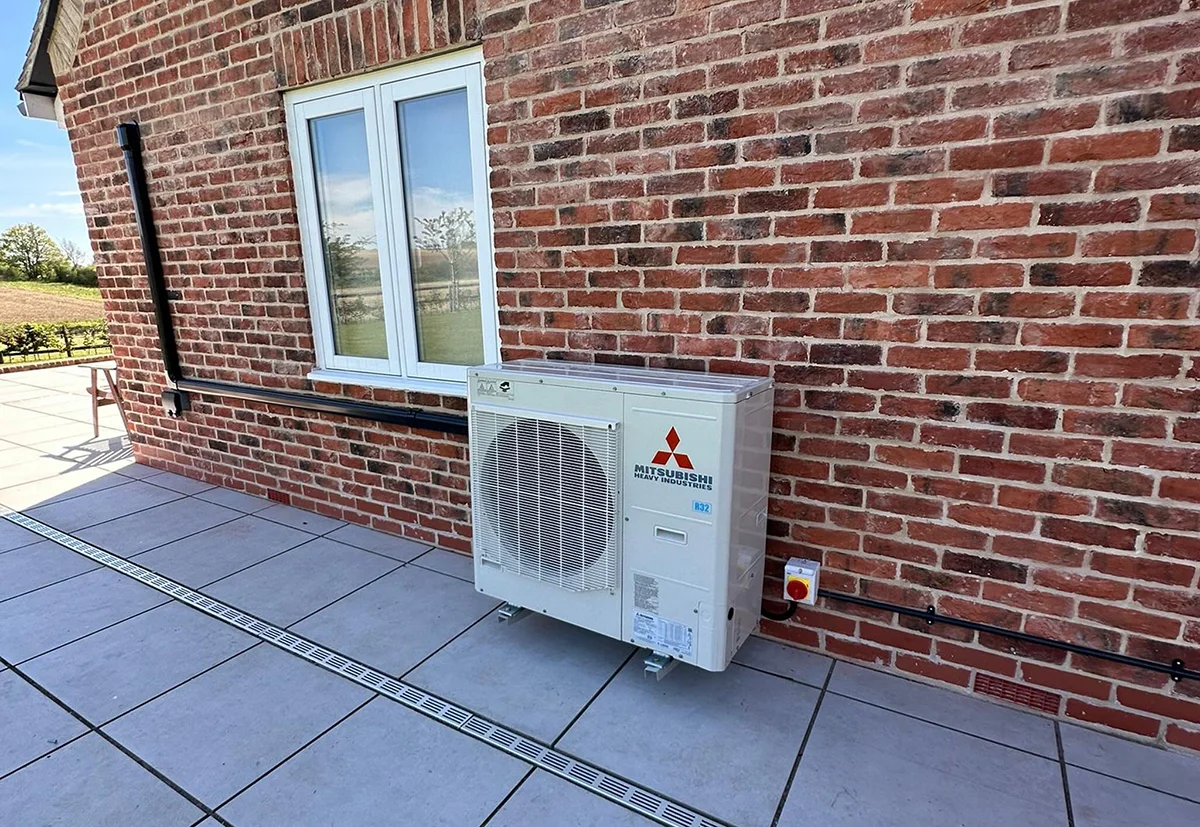
Air conditioning systems, particularly split systems of the kind fitted in most UK homes, work by removing heat from inside the room and transferring it outside. A refrigerant circulates between an indoor unit and an outdoor unit, absorbing heat at one end and releasing it at the other. This process is entirely closed-loop, meaning it doesn’t rely on outdoor air conditions to function, and it can both cool and heat a space depending on the mode selected.
Evaporative coolers work differently. They draw warm air through water-saturated pads, causing the water to evaporate and lower the air temperature before circulating it into the room. It’s a simpler process and uses less electricity, but it adds moisture to the air as it cools, which has significant implications depending on where you live.
The UK Climate Problem with Evaporative Cooling
This is arguably the most important factor for anyone based in Wiltshire or the South West. Evaporative cooling performs well in hot, dry climates where the outside air has low humidity, because the cooler can draw in dry air and the evaporation process works efficiently.
The UK, however, has a notably humid climate. On warm summer days, the air already carries a significant amount of moisture. Pushing more water vapour into a room that’s already humid doesn’t produce the refreshing cooling effect that manufacturers’ marketing tends to suggest. In practice, many UK homeowners find evaporative coolers make a warm, sticky room feel warmer and stickier.
Air conditioning, by contrast, actively removes humidity from the air as it cools, which is a key part of why it feels so noticeably comfortable.
Which of these best describes your property?
 Detached
 Semi Detached
 Terrace House
 Flat
 Bungalow
 Static Homes
 Commercial or small office
It just takes 60 Sec
And then you can book a free consultation
How Do the Two Systems Compare Side by Side?
|
Feature |
Air Conditioning |
Evaporative Cooling |
|
Cooling method |
Refrigerant heat transfer |
Water evaporation |
|
Heating capability |
Yes, in heat pump mode |
No |
|
Performance in humid climates |
Excellent |
Poor to moderate |
|
Humidity control |
Reduces humidity |
Increases humidity |
|
Running windows/doors |
Works with sealed room |
Requires open windows |
|
Installation required |
Yes, professional fitting |
Minimal (portable units) |
|
Year-round usability |
Yes (heating and cooling) |
Cooling only |
|
Suitable for UK climate |
Yes |
Limited |
What About Running Costs and Installation?
Evaporative coolers typically cost less to purchase and use less electricity to run than air conditioning systems, which is often cited as a key advantage. However, this comparison only holds when the evaporative cooler is actually delivering useful cooling, which in a humid UK climate is far from guaranteed.
A split system air conditioner fitted by qualified air conditioning fitters in Bristol offers consistent, controllable results regardless of outdoor conditions. It can also heat your home during cooler months, making it a genuinely year-round investment rather than a single-season product. When you factor in that dual functionality, the argument for a properly fitted air conditioning system becomes considerably stronger for most UK households.
When Might Evaporative Cooling Be Worth Considering?
To be fair, there are situations where an evaporative cooler might serve a purpose. If you have a very specific space such as a workshop or utility room where you simply need to take the edge off the heat during a short warm spell, and you’re comfortable with the limitations, a portable evaporative unit could provide some modest relief without a permanent installation.
For primary living areas, bedrooms, home offices or commercial premises, however, a split system or ducted air conditioning setup will deliver reliably better results, greater comfort and the added benefit of heating when the temperature drops. For most homes across the South West, the choice is fairly clear.
For most UK homes, air conditioning is the clear winner over evaporative cooling. It manages humidity, works in any weather, delivers consistent comfort and doubles as a heating solution during cooler months. Evaporative cooling has its niche, but the UK climate simply doesn’t lend itself to it as a primary cooling strategy.
We Cool & Heat fit air conditioning systems across Swindon and the wider Wiltshire region. If you’re ready to invest in year-round home comfort, contact our team today to discuss the right solution for your property.
Related articles
Which of these best describes your property?
Detached
Semi Detached
Terrace
Flat
Bungalow
Static Homes
Commercial or small office
The honest answer is that they work in fundamentally different ways, suit different climates and deliver very different results. Understanding those differences is what this guide is all about.
For a clearer picture of what’s right for your property, speak to an installer for tailored advice.
How Does Each System Actually Work?
Air conditioning systems, particularly split systems of the kind fitted in most UK homes, work by removing heat from inside the room and transferring it outside. A refrigerant circulates between an indoor unit and an outdoor unit, absorbing heat at one end and releasing it at the other. This process is entirely closed-loop, meaning it doesn’t rely on outdoor air conditions to function, and it can both cool and heat a space depending on the mode selected.
Evaporative coolers work differently. They draw warm air through water-saturated pads, causing the water to evaporate and lower the air temperature before circulating it into the room. It’s a simpler process and uses less electricity, but it adds moisture to the air as it cools, which has significant implications depending on where you live.
The UK Climate Problem with Evaporative Cooling
This is arguably the most important factor for anyone based in Wiltshire or the South West. Evaporative cooling performs well in hot, dry climates where the outside air has low humidity, because the cooler can draw in dry air and the evaporation process works efficiently.
The UK, however, has a notably humid climate. On warm summer days, the air already carries a significant amount of moisture. Pushing more water vapour into a room that’s already humid doesn’t produce the refreshing cooling effect that manufacturers’ marketing tends to suggest. In practice, many UK homeowners find evaporative coolers make a warm, sticky room feel warmer and stickier.
Air conditioning, by contrast, actively removes humidity from the air as it cools, which is a key part of why it feels so noticeably comfortable.
Which of these best describes your property?
Detached
Semi Detached
Terrace House
Flat
Bungalow
Static Homes
Commercial or small office
It just takes 60 Sec
And then you can book a free consultation
How Do the Two Systems Compare Side by Side?
|
Feature |
Air Conditioning |
Evaporative Cooling |
|
Cooling method |
Refrigerant heat transfer |
Water evaporation |
|
Heating capability |
Yes, in heat pump mode |
No |
|
Performance in humid climates |
Excellent |
Poor to moderate |
|
Humidity control |
Reduces humidity |
Increases humidity |
|
Running windows/doors |
Works with sealed room |
Requires open windows |
|
Installation required |
Yes, professional fitting |
Minimal (portable units) |
|
Year-round usability |
Yes (heating and cooling) |
Cooling only |
|
Suitable for UK climate |
Yes |
Limited |
What About Running Costs and Installation?
Evaporative coolers typically cost less to purchase and use less electricity to run than air conditioning systems, which is often cited as a key advantage. However, this comparison only holds when the evaporative cooler is actually delivering useful cooling, which in a humid UK climate is far from guaranteed.
A split system air conditioner fitted by qualified air conditioning fitters in Bristol offers consistent, controllable results regardless of outdoor conditions. It can also heat your home during cooler months, making it a genuinely year-round investment rather than a single-season product. When you factor in that dual functionality, the argument for a properly fitted air conditioning system becomes considerably stronger for most UK households.
When Might Evaporative Cooling Be Worth Considering?
To be fair, there are situations where an evaporative cooler might serve a purpose. If you have a very specific space such as a workshop or utility room where you simply need to take the edge off the heat during a short warm spell, and you’re comfortable with the limitations, a portable evaporative unit could provide some modest relief without a permanent installation.
For primary living areas, bedrooms, home offices or commercial premises, however, a split system or ducted air conditioning setup will deliver reliably better results, greater comfort and the added benefit of heating when the temperature drops. For most homes across the South West, the choice is fairly clear.
For most UK homes, air conditioning is the clear winner over evaporative cooling. It manages humidity, works in any weather, delivers consistent comfort and doubles as a heating solution during cooler months. Evaporative cooling has its niche, but the UK climate simply doesn’t lend itself to it as a primary cooling strategy.
We Cool & Heat fit air conditioning systems across Swindon and the wider Wiltshire region. If you’re ready to invest in year-round home comfort, contact our team today to discuss the right solution for your property.
Related articles
Which of these best describes your property?
Detached
Semi Detached
Terrace
Flat
Bungalow
Static Homes
Commercial or small office
At a glance
The honest answer is that they work in fundamentally different ways, suit different climates and deliver very different results. Understanding those differences is what this guide is all about.
For a clearer picture of what’s right for your property, speak to an installer for tailored advice.
How Does Each System Actually Work?
Air conditioning systems, particularly split systems of the kind fitted in most UK homes, work by removing heat from inside the room and transferring it outside. A refrigerant circulates between an indoor unit and an outdoor unit, absorbing heat at one end and releasing it at the other. This process is entirely closed-loop, meaning it doesn’t rely on outdoor air conditions to function, and it can both cool and heat a space depending on the mode selected.
Evaporative coolers work differently. They draw warm air through water-saturated pads, causing the water to evaporate and lower the air temperature before circulating it into the room. It’s a simpler process and uses less electricity, but it adds moisture to the air as it cools, which has significant implications depending on where you live.
The UK Climate Problem with Evaporative Cooling
This is arguably the most important factor for anyone based in Wiltshire or the South West. Evaporative cooling performs well in hot, dry climates where the outside air has low humidity, because the cooler can draw in dry air and the evaporation process works efficiently.
The UK, however, has a notably humid climate. On warm summer days, the air already carries a significant amount of moisture. Pushing more water vapour into a room that’s already humid doesn’t produce the refreshing cooling effect that manufacturers’ marketing tends to suggest. In practice, many UK homeowners find evaporative coolers make a warm, sticky room feel warmer and stickier.
Air conditioning, by contrast, actively removes humidity from the air as it cools, which is a key part of why it feels so noticeably comfortable.
Which of these best describes your property?
Detached
Semi Detached
Terrace House
Flat
Bungalow
Static Homes
Commercial or small office
It just takes 60 Sec
And then you can book a free consultation
How Do the Two Systems Compare Side by Side?
|
Feature |
Air Conditioning |
Evaporative Cooling |
|
Cooling method |
Refrigerant heat transfer |
Water evaporation |
|
Heating capability |
Yes, in heat pump mode |
No |
|
Performance in humid climates |
Excellent |
Poor to moderate |
|
Humidity control |
Reduces humidity |
Increases humidity |
|
Running windows/doors |
Works with sealed room |
Requires open windows |
|
Installation required |
Yes, professional fitting |
Minimal (portable units) |
|
Year-round usability |
Yes (heating and cooling) |
Cooling only |
|
Suitable for UK climate |
Yes |
Limited |
What About Running Costs and Installation?
Evaporative coolers typically cost less to purchase and use less electricity to run than air conditioning systems, which is often cited as a key advantage. However, this comparison only holds when the evaporative cooler is actually delivering useful cooling, which in a humid UK climate is far from guaranteed.
A split system air conditioner fitted by qualified air conditioning fitters in Bristol offers consistent, controllable results regardless of outdoor conditions. It can also heat your home during cooler months, making it a genuinely year-round investment rather than a single-season product. When you factor in that dual functionality, the argument for a properly fitted air conditioning system becomes considerably stronger for most UK households.
When Might Evaporative Cooling Be Worth Considering?
To be fair, there are situations where an evaporative cooler might serve a purpose. If you have a very specific space such as a workshop or utility room where you simply need to take the edge off the heat during a short warm spell, and you’re comfortable with the limitations, a portable evaporative unit could provide some modest relief without a permanent installation.
For primary living areas, bedrooms, home offices or commercial premises, however, a split system or ducted air conditioning setup will deliver reliably better results, greater comfort and the added benefit of heating when the temperature drops. For most homes across the South West, the choice is fairly clear.
For most UK homes, air conditioning is the clear winner over evaporative cooling. It manages humidity, works in any weather, delivers consistent comfort and doubles as a heating solution during cooler months. Evaporative cooling has its niche, but the UK climate simply doesn’t lend itself to it as a primary cooling strategy.
We Cool & Heat fit air conditioning systems across Swindon and the wider Wiltshire region. If you’re ready to invest in year-round home comfort, contact our team today to discuss the right solution for your property.
Related articles
Which of these best describes your property?
Detached
Semi Detached
Terrace
Flat
Bungalow
Static Homes
Commercial or small office